

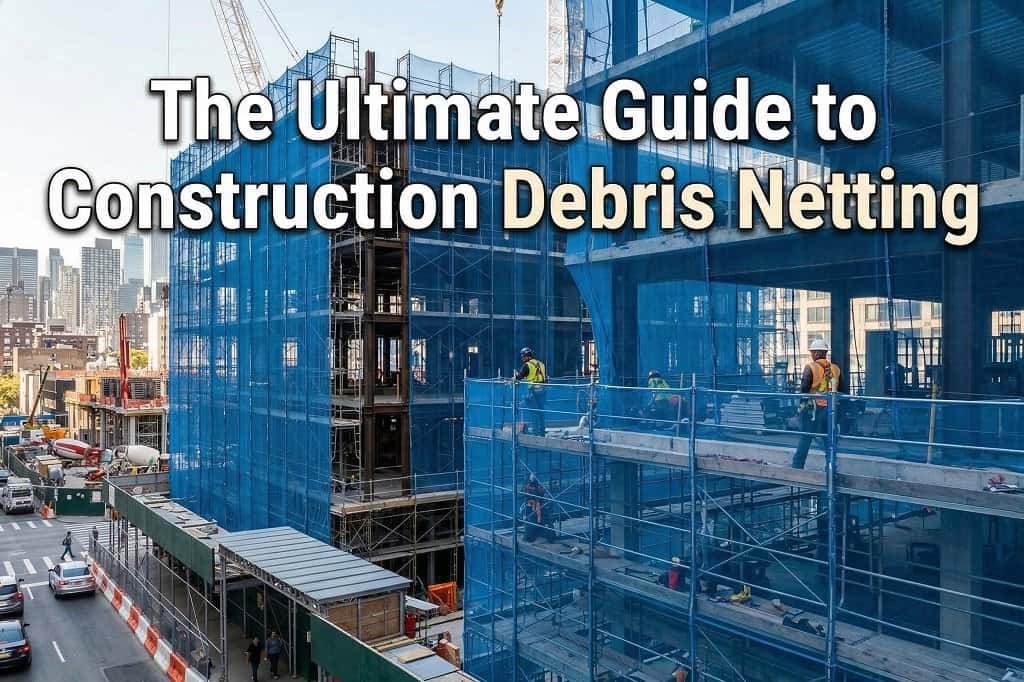

Introduction
Chaque année, des milliers d'ouvriers du bâtiment sont blessés par des chutes de débris, de nombreux accidents étant dus à des systèmes de protection inadéquats. L'Organisation internationale du travail (OIT) signale que les chantiers de construction sont une source majeure de blessures et de décès liés aux chutes de débris, d'où la nécessité de mettre en place des mesures de sécurité appropriées.
La meilleure méthode pour réduire ces risques consiste à utiliser des filets de protection contre les débris. Cependant, il existe différents types de filets pour le nettoyage des débris ; il convient donc de choisir le filet le plus adapté à votre projet. Ce guide définit le terme « filet de protection contre les débris », son utilité, ses différents types et explique comment sélectionner le filet le plus approprié pour votre chantier.
Qu'est-ce qu'un filet de protection contre les débris ?
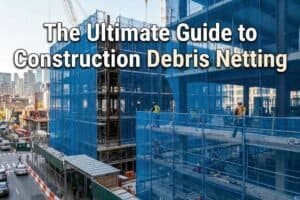
Les filets de protection contre les débris sont des dispositifs de sécurité utilisés sur les chantiers pour retenir les matériaux de construction, les débris et les outils susceptibles de tomber d'une certaine hauteur. Ils sont généralement installés sur les échafaudages, les façades ou les zones de travail en hauteur afin d'empêcher les chutes d'objets d'atteindre le sol et ainsi garantir la sécurité des travailleurs, des piétons et des autres installations.
Les filets de protection sont fabriqués à partir de matériaux synthétiques haute résistance, durables et résistants à l'usure, notamment le polypropylène ou le polyéthylène. Conçus pour empêcher la projection de débris, ils laissent passer l'air, ce qui réduit la résistance du pare-brise et évite la surcharge du filet.
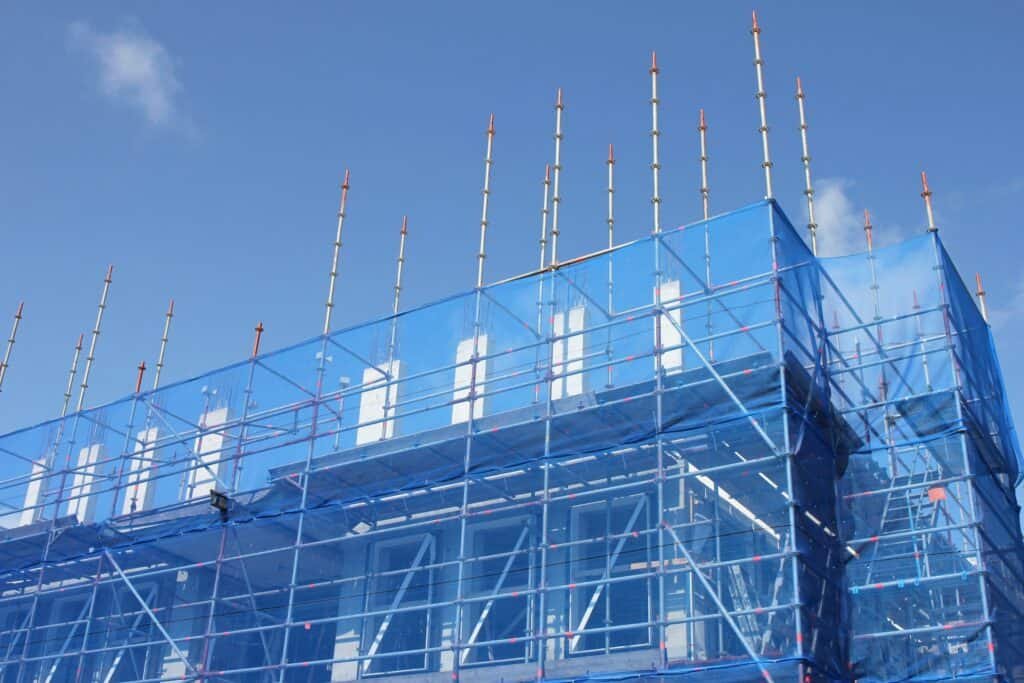
types de filets de protection contre les débris de construction
Filet de protection standard
Sur la plupart des chantiers, on utilise des filets de protection standard. Fabriqués en polypropylène ou en polyéthylène, ces filets résistent à la plupart des petits débris tels que les outils, les équipements et les matériaux de construction. Ils sont couramment utilisés sur les échafaudages et à l'extérieur des bâtiments, tant résidentiels que commerciaux.
- Matériel: Polypropylène ou polyéthylène.
- Taille des mailles: Il s'agit généralement d'une épaisseur de 3 à 10 mm permettant de piéger les petits débris tout en laissant l'air libre.
- Application: Travaux d'échafaudage et de façade en général.

Filet de protection robuste contre les débris
L'utilisation de filets de protection renforcés est indispensable pour les projets générant des débris importants, tels que la construction de ponts, les chantiers navals ou les sites industriels. Ces filets sont fabriqués à partir de matériaux plus résistants et plus épais, capables de supporter le poids des débris les plus volumineux. Ils sont également conçus pour résister à des charges plus importantes et à des conditions environnementales extrêmes.
- Matériel: Polyéthylène haute résistance.
- Taille des maillesLes ouvertures du maillage sont plus grandes pour supporter des matériaux lourds.
- ApplicationConstruction d'usines, d'immeubles de grande hauteur, de ponts.

Filet de protection ignifugé
Les filets de protection ignifugés sont utilisés dans les zones à risque d'incendie, notamment lors de travaux à chaud, à proximité des zones de soudage ou dans les chantiers navals. Ces filets contiennent des produits chimiques ignifuges qui empêchent leur inflammation et retiennent les étincelles et les braises susceptibles de tomber pendant les travaux.
- Matériel: Polypropylène ou polyéthylène traité ignifuge
- ApplicationZones où sont effectuées des opérations de soudage, de découpe ou autres opérations à haute température.
Filet de protection contre les débris stabilisé aux UV
Les filets de protection contre les débris stabilisés aux UV sont utilisés sur les chantiers exposés à un ensoleillement intense. Imprégnés d'inhibiteurs d'UV, ces filets ne se dégradent pas et conservent leur résistance et leur durabilité, même après une exposition prolongée au soleil. Ce type de filet est particulièrement adapté aux constructions extérieures et aux projets de longue durée, garantissant ainsi une utilisation optimale sur le long terme.
- Matériel: polypropylène ou polyéthylène stabilisé aux UV
- ApplicationProjets extérieurs à long terme exposés à la lumière directe du soleil
Filets de protection sur mesure
Pour les projets spéciaux, des filets de protection contre les débris peuvent être fabriqués sur mesure. Ces filets peuvent présenter des mailles personnalisées, un marquage spécifique, des couleurs variées, ou encore un revêtement supplémentaire, comme un traitement antifongique ou anti-alcalin. Leur flexibilité leur permet de s'adapter à des environnements de construction particuliers, tels que les tunnels, les raffineries ou les chantiers navals.
- Matériel: Options de matériaux personnalisés
- ApplicationProjets spécifiques et personnalisés, comme la maintenance industrielle ou les projets à forte visibilité nécessitant un branding.
Matériaux des filets de protection contre les débris
Les matériaux utilisés dans la fabrication des filets de protection contre les débris comprennent :
1. Polyéthylène haute densité (PEHD)
Propriétés:
- Résistance à la traction : Le PEHD est réputé pour sa très grande résistance à la traction et peut donc résister aux effets de la chute d’un corps.
- Résistance aux UV : Le PEHD est très résistant aux rayons UV, ce qui signifie que le filet ne se détériorera pas facilement lorsqu’il est exposé au soleil et peut donc être utilisé en extérieur.
- Durabilité : Le filet en PEHD est durable et peut être utilisé dans de nombreuses conditions abrasives, même dans des environnements difficiles ; il est couramment utilisé dans les filets anti-débris standard.
- Utilisations typiques : Chantiers de construction en général, échafaudages et protection des façades.
2. Polyester
Propriétés:
- Grande résistance : Le filet en polyester peut être utilisé dans des applications exigeantes car il est solide et résistant à l'abrasion.
- Filet tricoté : Le filet tricoté est fréquemment utilisé car il est plus souple et plus résistant.
- Résistance aux intempéries : Le filet en polyester n’est pas aussi résistant aux UV que le PEHD, mais il peut être utilisé dans des conditions relativement difficiles.
- Applications courantes : Ce produit est utilisé dans les secteurs où les contraintes mécaniques et la durabilité sont essentielles, comme dans la démolition ou en milieu industriel.
3. Polypropylène (PP)
Propriétés:
- Flexibilité : Le polypropylène est une substance très flexible, plus facile à manipuler et à installer dans un environnement où le filet doit être plus souple pour s'adapter aux formes irrégulières.
- Léger : Il n'est pas lourd comme le PEHD ou le polyester, ce qui peut faciliter la manutention et l'installation lorsque les travaux de construction sont de petite envergure ou temporaires.
- Durabilité modérée : le PP offre une protection suffisante pour résister à des applications moins critiques, bien qu’il puisse ne pas être aussi durable et ne pas être aussi résistant aux UV que le PEHD.
- Applications courantes : Convient aux petits travaux de construction, aux échafaudages ou aux endroits peu exposés aux rayons UV et aux intempéries.
4. Polyester enduit de PVC
Propriétés:
- Haute résistance : Ce matériau possède un haut degré de résistance et convient donc aux projets exigeant une grande durabilité.
- Résistance à l'abrasion : Le polyester enduit de PVC présente une résistance à l'abrasion supérieure à celle du polyester conventionnel et offre une durée de vie élevée même dans des conditions difficiles.
- Imperméable : Le revêtement en PVC offre une protection supplémentaire contre l'eau, ce qui est très important dans les endroits susceptibles d'être exposés à la pluie ou à toute forme d'humidité.
- Protection UV : Ce matériau offre également une protection UV élevée, garantissant sa longévité même en cas d'exposition prolongée au soleil.
- Applications courantes : Utilisé dans des endroits soumis à des charges mécaniques élevées ou à des conditions difficiles, par exemple dans des sites industriels, sur des chantiers offshore ou dans des projets exigeant une durabilité accrue.
💡 Conseil de pro : Choisir une taille de maille inadaptée peut entraîner un non-respect des normes. Vous ne savez pas quelle taille convient à votre projet ?
Un autre élément de conception important est la taille des mailles. Le nombre de mailles du filet détermine son efficacité à retenir les débris. Il est recommandé d'utiliser des mailles plus fines (3 à 5 mm) pour piéger les petits objets, comme des outils ou des boulons et écrous. Des mailles encore plus fines (moins de 10 mm) conviennent aux débris plus petits et plus lourds.
Des bords renforcés empêchent le filet de se déchirer ou de s'user, ce qui prolonge sa durée de vie. Pour des applications plus résistantes, on utilise parfois des modèles noués, tandis que les modèles sans nœuds présentent une surface plus lisse, moins sujette aux enchevêtrements.
Principaux avantages des filets de protection contre les débris dans le secteur de la construction
Sécurité des travailleurs:
Les filets de protection contre les débris sont importants en raison de la protection qu'ils offrent aux travailleurs au sol, notamment lors de la construction d'immeubles de grande hauteur ou de ponts, où les travailleurs risquent d'être heurtés par des outils ou des matériaux tombant du haut de la structure.
Cela réduit considérablement le risque de blessure par la chute d'objets tels que de petits outils ou des matériaux lourds.
Protection publique:
Sur les chantiers où les bâtiments sont situés à proximité immédiate des routes ou des zones habitées, l'utilisation de filets de protection permet d'éviter que les débris, même en cas de chute, ne blessent les piétons ou les véhicules. Cette mesure de sécurité est essentielle dans les zones urbaines denses où les chantiers sont généralement très proches des habitations.
Prévention des dommages:
Outre la protection des citoyens, les filets de protection des débris servent également à préserver les biens environnants. Qu'il s'agisse de voitures, de bâtiments voisins ou d'infrastructures, les filets empêchent les chutes de débris de causer des dommages imprévus, ce qui permet de gagner du temps et de l'argent.
Contrôle de la poussière et du bruit:
L'utilisation de filets de protection peut contribuer à la gestion de la poussière et du bruit aux abords d'un chantier, ce qui est plus respectueux de l'environnement et conforme à la réglementation locale. Ceci est particulièrement important dans les zones résidentielles et urbaines.
Conformité:
Les filets de protection contre les débris garantissent que les chantiers de construction sont organisés conformément aux normes de sécurité exigées par les autorités réglementaires telles que l'OSHA, EN 1263 et AS/NZS 1891, ce qui peut contribuer à éviter les problèmes juridiques et les sanctions.
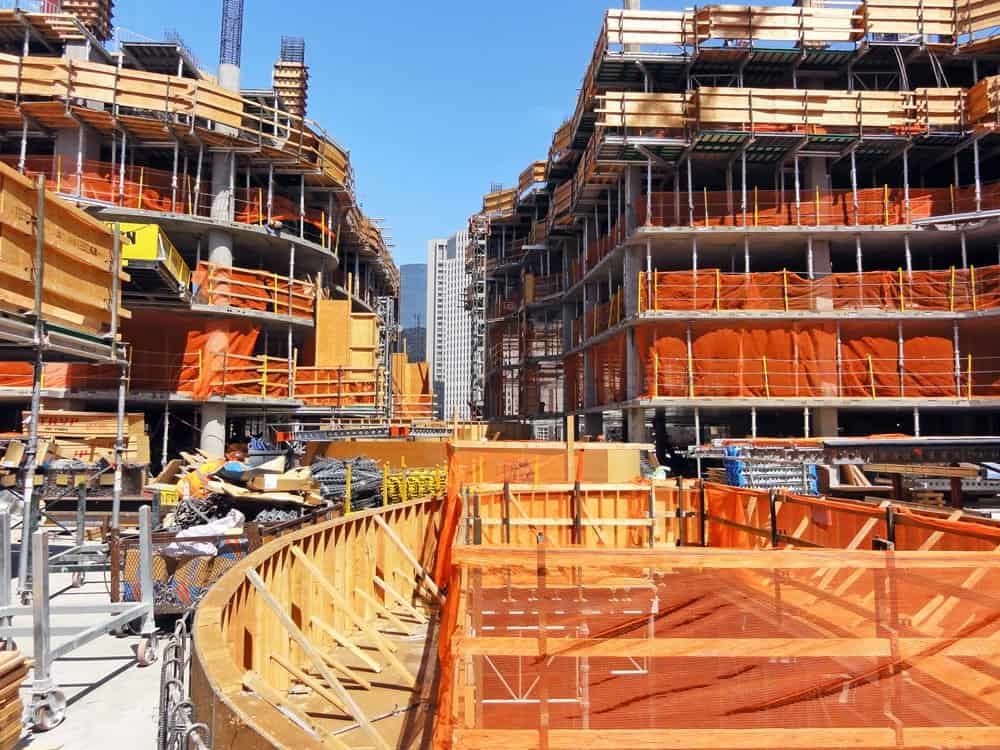
Comment choisir le filet de protection adapté à votre projet
Planification préalable à l'installation
Avant toute installation, une évaluation précise du site est indispensable. Celle-ci comprend l'évaluation de la hauteur du bâtiment, de son exposition au vent et de la nature des travaux prévus. Les projets impliquant la démolition ou la manipulation de matériaux lourds nécessiteront un filet plus résistant et plus durable que pour des applications plus légères.
Le choix des matériaux doit être adapté aux conditions du projet. Par exemple, le filet en PEHD est couramment utilisé dans la construction générale en raison de sa résistance aux UV et de sa durabilité, tandis que le polyester enduit de PVC peut être préférable dans des environnements plus difficiles. Le respect des réglementations locales est tout aussi important, notamment pour les projets situés sur des marchés comme le Royaume-Uni, l'Union européenne ou l'Amérique du Nord.
Pratiques d'installation adéquates
Le filet de protection contre les débris doit être solidement fixé à la structure de l'échafaudage afin d'éviter tout mouvement ou chute. Il doit être fixé à l'aide de liens, de clips ou de systèmes de fixation robustes, capables de résister aux charges du vent et aux activités du chantier.
Il est primordial de maintenir la tension du filet. Celui-ci doit être bien tendu afin d'éviter qu'il ne se détende, ce qui pourrait entraîner une accumulation de débris et une surcharge de la structure. Un filet trop lâche réduit non seulement son efficacité, mais peut également être source d'autres dangers.
Lorsqu'on utilise plusieurs sections, il faut prévoir des chevauchements pour éviter les interstices. Les joints doivent être solidement fixés pour assurer une couverture complète, notamment dans les immeubles de grande hauteur où le risque de chutes de débris est plus élevé.
Inspection et entretien de routine
Un contrôle régulier est nécessaire pour garantir des performances optimales. Ce type de filet ne doit présenter ni déchirures, ni effilochages, ni fixations desserrées, et doit être examiné en particulier après un fort vent ou une utilisation intensive. Toute partie endommagée doit être réparée ou remplacée immédiatement.
Il convient également de surveiller attentivement les points de fixation. Les attaches et les connecteurs peuvent se desserrer ou se détériorer avec le temps, surtout à l'extérieur. Le filet lui-même est moins important que la solidité des fixations.
Les zones poussiéreuses ou présentant des débris peuvent nécessiter un nettoyage. Le lavage des saletés doit garantir que la visibilité et les performances du matériau ne soient pas compromises ; toutefois, il convient de veiller à ne pas l'endommager lors de cette opération.
Considérations météorologiques et environnementales
Les filets de protection contre les débris sont constamment exposés aux intempéries, ce qui peut réduire leur durée de vie. Les vents violents peuvent également exercer une forte pression sur le filet et, en cas d'exposition continue aux UV, les matériaux peuvent s'affaiblir avec le temps.
Des renforts supplémentaires ou des contrôles plus fréquents pourraient s'avérer nécessaires dans les zones exposées à des conditions météorologiques extrêmes. La probabilité d'échec du projet peut être considérablement réduite par une planification préalable adaptée à de telles circonstances.
Gestion du remplacement et du cycle de vie
La durée de vie de tous les filets utilisés pour la réassurance des dévidoirs est limitée. Même les matériaux de haute qualité s'usent avec le temps sous l'effet des UV, des contraintes mécaniques et des intempéries. L'état du filet peut être surveillé afin de déterminer quand il convient de le remplacer.
Les filets endommagés ou vétustes sont dangereux et peuvent entraîner une impunité pour les infractions au règlement de chantier. Le remplacement préventif est un élément essentiel d'un environnement de construction sûr et professionnel.
Meilleures pratiques d'installation et d'entretien des filets de protection contre les débris
Installation correcte:
- Veillez à ce que le filet soit bien ancré pour éviter qu'il ne s'affaisse.
Installez le filet en utilisant des matériaux solides qui ne peuvent pas être détachés par grand vent ou lorsqu'il est chargé de matériaux lourds.
Inspections de routine:
- Faites vérifier régulièrement l'usure et la dégradation due aux UV.
- Tout filet endommagé ou corrompu doit être remplacé dès qu'il présente un danger.
Entretien:
- N'oubliez pas de déduire les grosses dépenses pour éviter le surmenage.
Essuyez le filet pour enlever la poussière et assurez-vous qu'il est en bon état de fonctionnement.
Erreurs courantes lors de l'utilisation de filets de protection contre les débris
Taille incorrecte:
Le filet ne doit pas être choisi avec des mailles trop grandes, car celles-ci doivent être suffisamment grandes pour empêcher les débris de passer à travers et de compromettre son rôle de sécurité.
Négligence de l'entretien:
Ne pas laver ou vérifier le filet après un certain temps peut diminuer son efficacité et augmenter le risque d'accidents.
Installation incorrecte:
Une défaillance peut survenir en raison d'une installation incorrecte, par exemple des points d'ancrage inadéquats ou un filet trop lâche.
Choisir un filet de mauvaise qualité:
L'utilisation de filets de qualité inférieure et d'alternatives moins chères semble rentable à court terme, mais peut entraîner des défaillances du filet et des coûts de remplacement ultérieurs à long terme.

Conclusion
Les filets de protection sont essentiels à la sécurité sur les chantiers. Ils permettent de prévenir les dommages que les chutes de débris pourraient causer aux travailleurs, aux piétons et aux biens. Une fois le type de débris identifié, le choix du filet de protection dépend des conditions du site, des matériaux utilisés, du respect des normes de sécurité et de la nature des débris prévus.
Correctement installées, inspectées et entretenues régulièrement, les filets de protection contre les débris sont essentiels pour garantir le respect des délais sur les chantiers et faire de la sécurité une priorité absolue. Prêt à optimiser la sécurité sur votre prochain chantier ? Contactez dès aujourd’hui un fournisseur certifié pour bénéficier de filets de protection contre les débris de la meilleure qualité.
FAQ
Q : Quelle est la durée de vie d'un filet stabilisé aux UV ?
R: Selon l'intensité du rayonnement solaire, les filets en PE stabilisés aux UV de haute qualité durent généralement de 2 à 5 ans en extérieur.
Q : Les filets de protection contre les chutes répondent-ils aux exigences de l'OSHA en matière de protection contre les chutes ?
A : Les filets de protection contre les débris servent principalement à protéger contre les chutes. objets. Pour l'arrêt des chutes du personnel, vous devez utiliser des filets de sécurité spécifiquement homologués (ANSI A10.11).
Q : Combien coûte un filet de protection contre les débris ?
A : Le coût des filets anti-débris varie selon le matériau, la taille, les options de personnalisation et la conformité aux normes de sécurité (par exemple, ignifuge ou résistant aux UV). En général, les filets anti-débris standard sont abordables, tandis que les modèles renforcés ou ignifuges peuvent être plus onéreux. Il est important de trouver un juste équilibre entre coût, qualité et durabilité pour garantir la sécurité et la conformité à long terme.

 FR
FR  EN
EN  SV
SV  IT
IT  AR
AR  DE
DE  ES
ES  FI
FI  ET
ET  RU
RU 