

Introduction
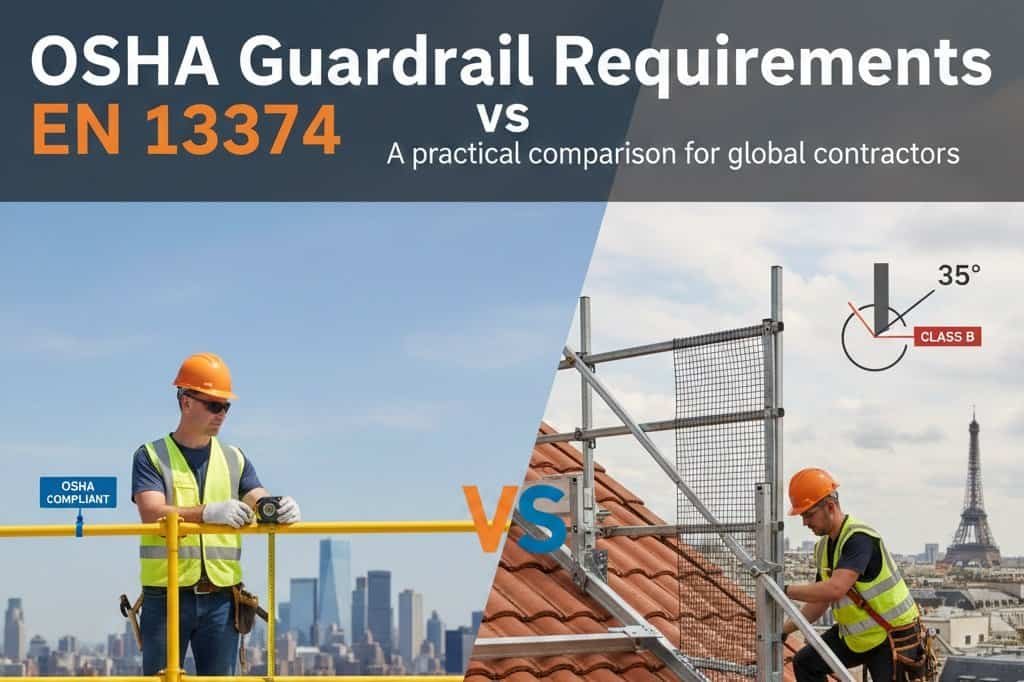
Il est essentiel pour les entreprises et les équipes d'approvisionnement travaillant à l'international de comprendre la différence entre les exigences de l'OSHA en matière de garde-corps et la norme EN 13374. L'OSHA établit les normes de sécurité sur les chantiers aux États-Unis, tandis que la norme EN 13374 définit les exigences de performance des systèmes de protection temporaire des bords utilisés à l'échelle internationale.
Ce tableau comparatif vous aidera à vous y retrouver parmi les deux normes et à garantir leur conformité lors de la spécification des systèmes de protection des bords pour divers projets de construction.
Ce que chaque norme “ tente de faire ”
OSHA (Exigences réglementaires américaines)
L'OSHA (Occupational Safety and Health Administration) est un organisme de réglementation américain qui établit des normes minimales de sécurité afin de garantir la protection des travailleurs sur les chantiers de construction. Ses normes de protection contre les chutes (définies dans le titre 29 du CFR, section 1926, sous-partie M) visent à réduire les accidents et les décès dus aux chutes sur les chantiers, l'une des principales causes de blessures et de décès dans le secteur.
EN 13374 (Norme européenne de performance pour la protection temporaire des bords)
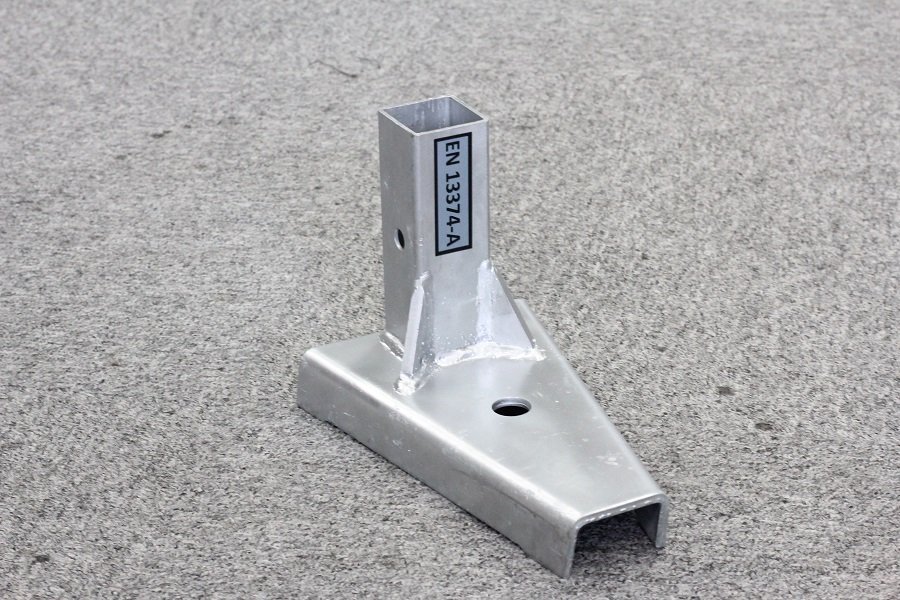
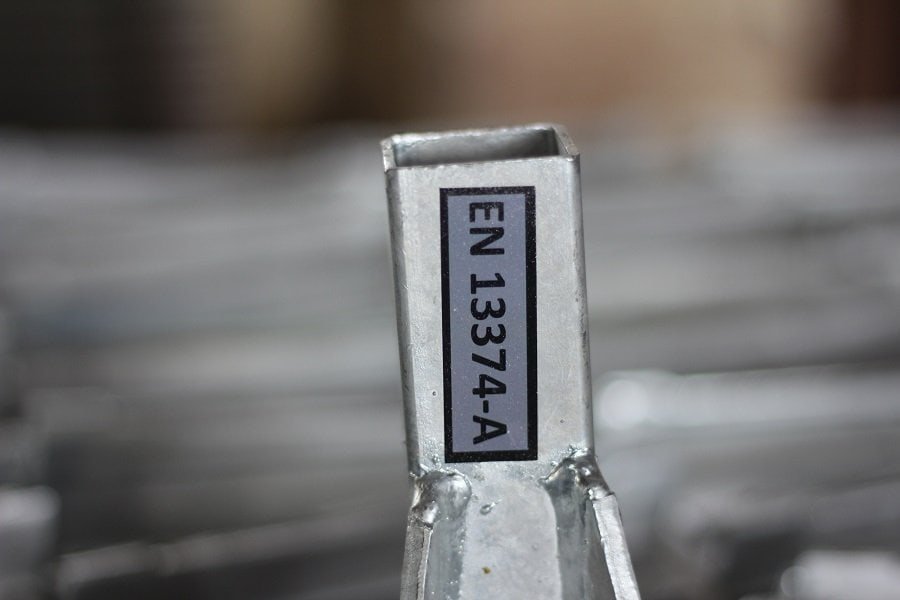
La norme EN 13374 est une norme de produit utilisée principalement en Europe et à l'international pour garantir la sécurité des systèmes de protection temporaire des bords (STEP) dans diverses situations. Cette norme porte sur la conception et les essais des produits afin de garantir que les systèmes utilisés sur les chantiers répondent à certains critères de performance dans des conditions réalistes.
Contrairement à l'OSHA, qui définit des règles minimales de sécurité pour les chantiers, la norme EN 13374 fournit des méthodes d'essai détaillées et des exigences de performance pour les systèmes de protection de bord. Elle évalue le comportement du système sous charge, notamment le poids des travailleurs, des matériaux et les forces environnementales telles que le vent. La norme est divisée en trois classes (A, B et C), selon des facteurs comme la hauteur de chute et la pente de la surface, afin de prendre en compte différents types de conditions de travail (par exemple, toitures inclinées, zones de chute verticale).
Critères essentiels de l'OSHA concernant les garde-corps (ce que les inspecteurs recherchent)
D'après la norme OSHA 29 CFR 1926.502(b), un système de garde-corps conforme comprend généralement :
- Hauteur du rail supérieur : 42 po ± 3 po au-dessus du niveau de marche/travail (peut dépasser 45 pouces si tous les autres critères sont toujours respectés).
- Rail intermédiaire / remplissage : requis lorsqu'il n'y a pas de mur/parapet d'au moins 21 pouces de haut ; lisse intermédiaire installée à mi-hauteur environ.
- Contrôle d'ouverture : Les éléments intermédiaires sont espacés de manière à ce que les ouvertures soient pas plus de 19 pouces.
- Force: Le rail supérieur doit résister 200 lb force appliquée vers l'extérieur/vers le bas ; rail intermédiaire/remplissage 150 lb.
Plinthes (la nuance du bord inférieur que l'on oublie souvent) :
- Nécessaire pour empêcher la chute d'objets dans les situations où des objets pourraient tomber à des niveaux inférieurs, notamment lorsque des outils ou des matériaux sont stockés près du bord.
- Hauteur minimale : typiquement 3,5 pouces (3½ pouces).
- Pourquoi c'est important : Il s'agit d'un point faible fréquent : les rails peuvent être conformes, mais l'absence ou la sous-dimensionnement des plinthes déclenchent des alertes de sécurité car le danger se déplace de la voie principale vers la voie de droite. les gens qui tombent à chute d'objets.
Point clé à retenir : L'OSHA est très axée sur les “ règles du site ” — dimensions, résistance et bases de la configuration.

Concept de base de la norme EN 13374 : Classes A / B / C
La norme EN 13374 classe les systèmes par scénario de risque, en particulier pente de surface et hauteur de chute.
- Classe A : pour 0–10° pentes (scénarios de charge statique)
- Classe B : pour jusqu'à 30°, ou jusqu'à 60° si la hauteur de chute est limitée (scénario dynamique inclus)
- Classe C : pour les pentes plus raides (souvent 30–45°, et parfois jusqu'à 60° avec des limites de hauteur de chute) et comprend des conditions dynamiques plus exigeantes
Point clé à retenir : La norme EN 13374 est construite autour de scénarios de chantier réels tels que les toits en pente et les risques de “ roulements/glissements ”, et pas seulement un garde-corps à bord plat.
Principales différences
- OSHA : se concentre sur la sécurité de base sur les chantiers et les normes minimales d’installation (par exemple, la hauteur, la résistance et la configuration des garde-corps) pour prévenir les chutes à une hauteur spécifique.
- EN 13374 : Se concentre sur les performances du produit lui-même dans des conditions réelles, notamment la capacité de charge, la résistance au vent et l’adaptabilité aux pentes, garantissant ainsi la sécurité du système dans un plus large éventail d’environnements.
En résumé, si la norme OSHA garantit une protection de base sur les chantiers américains, la norme EN 13374 assure la fiabilité et la durabilité des systèmes de protection des bords dans des environnements de construction plus variés. Ces deux normes sont essentielles à la conformité, mais elles poursuivent des objectifs différents : l’une garantit la sécurité de l’installation, l’autre la performance du système.
Comparaison pratique (ce que les équipes d'approvisionnement devraient réellement comparer)
| Sujet | Exigences de l'OSHA en matière de garde-corps (États-Unis) | EN 13374 (TEPS UE/International) |
|---|---|---|
| Qu'est-ce que c'est | Réglementation applicable aux employeurs (conformité minimale) | Norme de performance du produit/système + méthodes d'essai |
| “L'accent est mis sur la réussite ou l'échec. | Hauteur, remplissage, ouvertures, résistance (+ plinthe en cas de risque de chute d'objet) | Performance basée sur la classe pour les conditions de pente/hauteur de chute |
| Surfaces inclinées | Non classé selon la pente (vous devez tout de même le protéger) | Sélection explicite des classes en fonction de la pente et (souvent) des limites de hauteur de chute |
| Comportement dynamique | Non formulés comme des tests dynamiques basés sur les classes dans le texte de la règle | B/C prennent explicitement en compte les scénarios de chargement dynamique |
Comment spécifier correctement les projets globaux
Si vous vendez ou achetez entre régions, l'approche la plus sûre est exigences bilingues:
A) Conformité du chantier selon les normes OSHA (critères d'installation)
- Géométrie et résistance du garde-corps selon 29 CFR 1926.502(b) (hauteur du rail supérieur, rail intermédiaire/remplissage, ouvertures maximales, résistance de 200 lb/150 lb).
- En cas de risque de chute d'objets, installer des plinthes conformes aux critères de l'OSHA (généralement d'une hauteur minimale de 3½ pouces).”)
B) Performances du système EN 13374 (ce que le produit doit être)
- Le système doit être conçu/testé selon la norme EN 13374 Classe __ (A/B/C) en fonction de la pente du toit et du scénario de hauteur de chute.
C) Clause de vérification de la réalité (protège les deux parties, en particulier le fournisseur)
- “ Le fournisseur doit confirmer la capacité de classe du système en fonction des plans et de la configuration du produit fournis. L’acheteur doit vérifier que la classe choisie correspond à la pente réelle du site et à l’évaluation des risques de chute. ”
Cela évite l'erreur classique : acheter un “ garde-corps ” conforme aux dimensions de l'OSHA mais non validé pour les pentes raides/conditions de risque dynamique.
Guide de décision rapide
- Dalles plates / cadres en béton (bords typiques) : les critères OSHA + EN 13374 Classe A constituent souvent l'attente de base sur les chantiers régis par la norme EN.
- Toits à pente faible/moyenne : commencer à évaluer la classe B.
- Pentes abruptes / risque de glissement plus élevé : vous êtes en zone de classe C.
Point d’équilibre optimal en matière de compatibilité des hauteurs (question métrique vs impériale) :
- Astuce dimensionnelle : De nombreux systèmes EN 13374 sont conçus pour une hauteur de garde-corps d’environ 1 mètre (≈ 39,4 pouces). Cette hauteur est compatible avec la plage d’acceptation standard de l’OSHA pour la lisse supérieure (39″–45″, la norme étant de 42″ ± 3″).
- Mais : le système n'est véritablement “ conforme en hauteur ” que s'il est installé parfaitement sur la surface de travail réelle (les variations d'épaisseur de la dalle, les décalages de la base, les terrasses inégales ou les poteaux mal positionnés peuvent vous faire sortir des tolérances).
FAQ
Q1 : Pouvons-nous écrire “ conforme à l'OSHA ” dans la demande de devis et ignorer la norme EN 13374 ?
Si le projet se situe aux États-Unis, la terminologie OSHA est essentielle. En revanche, pour les projets internationaux (ou ceux définis par des consultants utilisant la terminologie EN), il convient également de préciser la norme EN 13374, classe (A/B/C). L'OSHA se concentre sur les critères relatifs aux garde-corps de chantier, tandis que la norme EN 13374 est une norme de performance/classe du système. Spécifier les deux permet d'éviter toute incohérence.
Q2 : Que devons-nous demander au fournisseur de confirmer et que doit vérifier l’acheteur ?
- Le fournisseur confirme : le capacité de classe du système (par exemple, “ Cette configuration est conforme à la norme EN 13374 Classe B ”), et fournit les limites de configuration et la documentation.
- L'acheteur vérifie : la classe choisie correspond conditions réelles du site (Pente, hauteur de chute, type de bord, modifications de la méthode de travail). Ceci protège les deux parties lorsque les conditions du chantier changent après la commande.
Q3 : Quels dessins/informations devons-nous inclure pour que le fournisseur puisse établir un devis précis ?
Veuillez inclure : les détails des bords de dalle/poutre, la plage d’épaisseur de la dalle, le type de fixation (serre-joint/douille/boulon/lestage), la longueur de la barrière, le nombre d’angles, les exigences relatives aux portillons et, en cas de travaux sur toiture, l’angle de pente et la hauteur de chute. Plus les informations fournies sont complètes, moins il y aura de surprises le jour de l’installation.
Q4 : Si le système est basé sur le système EN (métrique), sera-t-il conforme aux normes OSHA en matière de hauteur ?
Souvent oui hauteur du rail supérieur En effet, de nombreux systèmes EN mesurent environ 1 m (39,4 pouces). Cette hauteur peut se situer dans la plage d'acceptation typique de l'OSHA (39 à 45 pouces). Toutefois, cela n'est valable que si la hauteur d'installation est mesurée à partir de la surface de circulation/de travail réelle et reste dans les limites de tolérance ; votre demande de devis doit donc mentionner explicitement l'exigence de hauteur de l'OSHA.
Q5 : Avons-nous toujours besoin de plinthes, ou seulement parfois ?
Seulement “ parfois ”, mais ces “ parfois ” sont fréquents : en cas de risque de chute d’objets (outils/matériaux près du bord, présence de plusieurs corps de métier en dessous, voies d’accès fréquentées), les plinthes deviennent indispensables. De nombreux projets échouent à l’inspection non pas à cause d’un défaut de la lisse supérieure, mais parce que la protection du bord inférieur a été négligée.
Q6 : Quels documents la demande de prix doit-elle exiger (pack minimum) ?
Au minimum : fiche technique du système, description de la configuration (éléments inclus/exclus) et déclaration de conformité aux normes spécifiées. Pour les applications à haut risque (toitures, interfaces publiques, infrastructures), veuillez également demander des références de tests et des identifiants de traçabilité pour les lots fournis.
Q7 : Peut-on mélanger des composants de marques différentes pour “ faire fonctionner le tout ” ?
À utiliser avec précaution. Le mélange de matériaux peut modifier la géométrie, la rigidité, la résistance des assemblages et la hauteur utile — autant d’éléments mesurés par les inspecteurs. Si un mélange est prévu, il convient de le préciser dans la demande de prix et d’exiger du fournisseur qu’il confirme les hypothèses de compatibilité (ou qu’il indique que les systèmes mixtes ne sont pas couverts par les capacités déclarées).


 FR
FR  EN
EN  SV
SV  IT
IT  AR
AR  DE
DE  ES
ES  FI
FI  ET
ET  RU
RU 