

Einführung
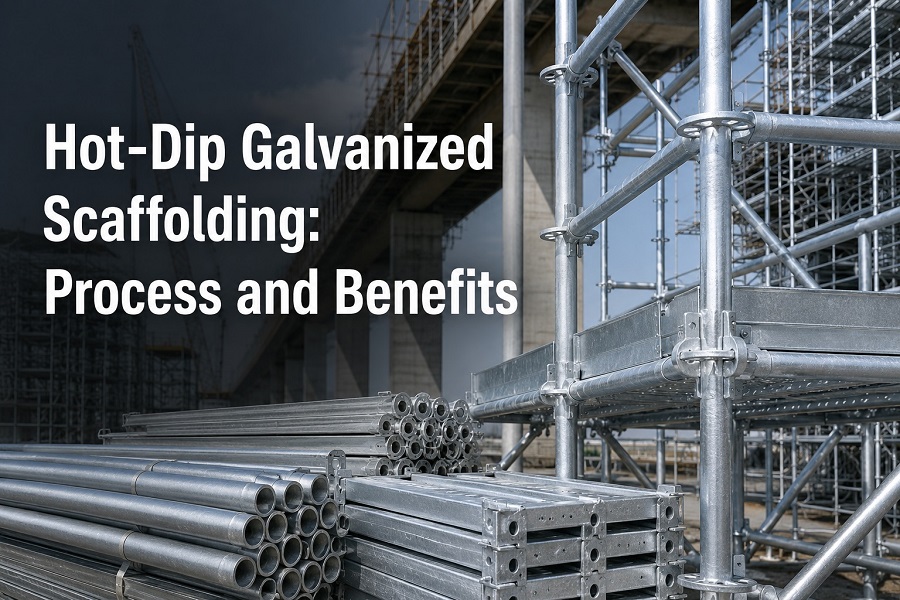
Scaffolding is used in some of the most demanding construction environments. It is exposed to rain, humidity, dust, impact, chemicals, and repeated assembly and dismantling. Without proper surface protection, steel scaffold components can rust, lose strength, and become difficult to connect safely.
This is why hot-dip galvanized scaffolding is widely used in construction, industrial maintenance, bridge projects, shipyards, power plants, and outdoor applications. Through the hot-dip galvanizing process, steel scaffold components are coated with a protective zinc layer that helps resist corrosion and extend service life.
For contractors, rental companies, and project owners, galvanized scaffolding is not only about appearance. It is also about durability, safety, lower maintenance cost, and long-term value.
What Is Hot-Dip Galvanized Scaffolding?
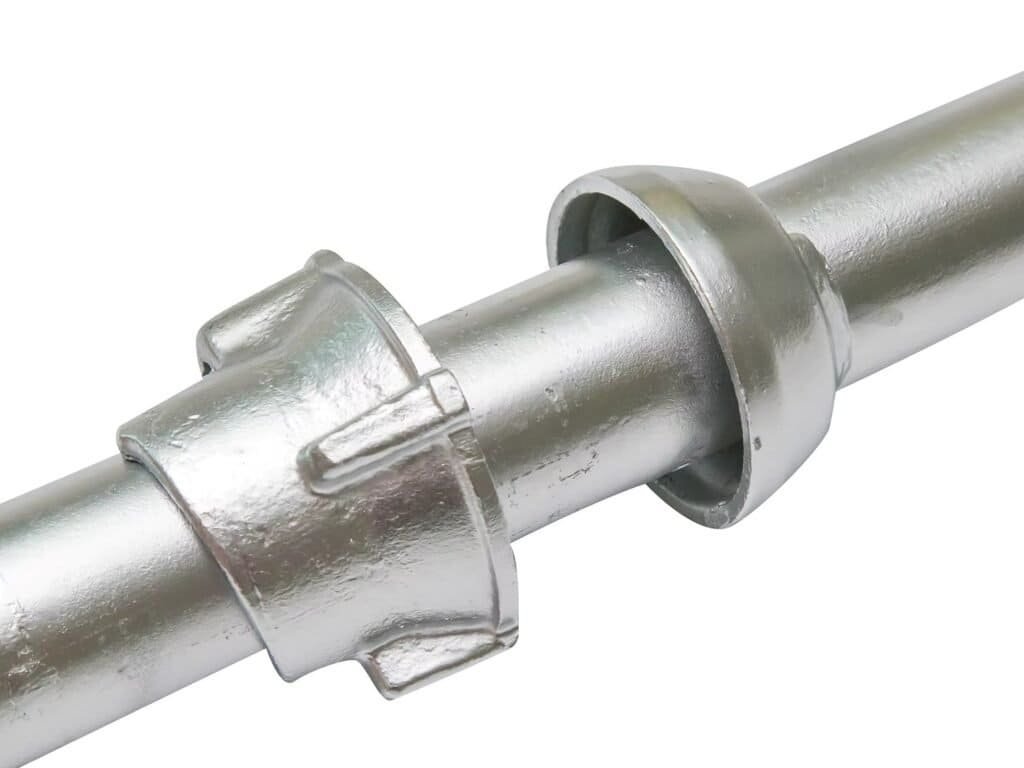
Hot-dip galvanized scaffolding refers to steel scaffolding components that are coated with zinc by being immersed in molten zinc. During this process, the zinc reacts with the steel surface and forms a strong zinc-iron alloy layer.
This protective coating helps prevent rust and corrosion, making the scaffold more suitable for outdoor and harsh environments.
Common hot-dip galvanized scaffold products include:
- Ringlock scaffolding standards, ledgers, braces, and rosettes
- Scaffold tubes
- Frame scaffolding
- Stahlplanken
- Fußstützen and U-head jacks
- Scaffold couplers
- Stair systems and accessories
Unlike paint, the galvanized layer is not only attached to the surface. It is metallurgically bonded to the steel, which makes the coating more durable during transportation, installation, and daily jobsite use.
How Does the Hot-Dip Galvanizing Process Work?
The hot-dip galvanizing process usually includes three main stages: surface preparation, galvanizing, and inspection. Each step is important because the final coating quality depends on proper cleaning, zinc bonding, and quality control.
1. Surface Preparation
Before galvanizing, scaffold components must be thoroughly cleaned. Any oil, rust, dust, mill scale, or welding residue may affect the bonding between zinc and steel.
The surface preparation stage usually includes:
- Degreasing: removes oil and grease from the steel surface.
- Pickling: removes rust and mill scale.
- Fluxing: prepares the steel surface for reaction with molten zinc.
- Drying: helps avoid zinc splash and improves coating quality.
For scaffolding, this stage is especially important because components such as tubes, ringlock standards, ledgers, braces, and planks often have welded areas, holes, corners, and edges that must be properly cleaned before coating.
2. Immersion in Molten Zinc
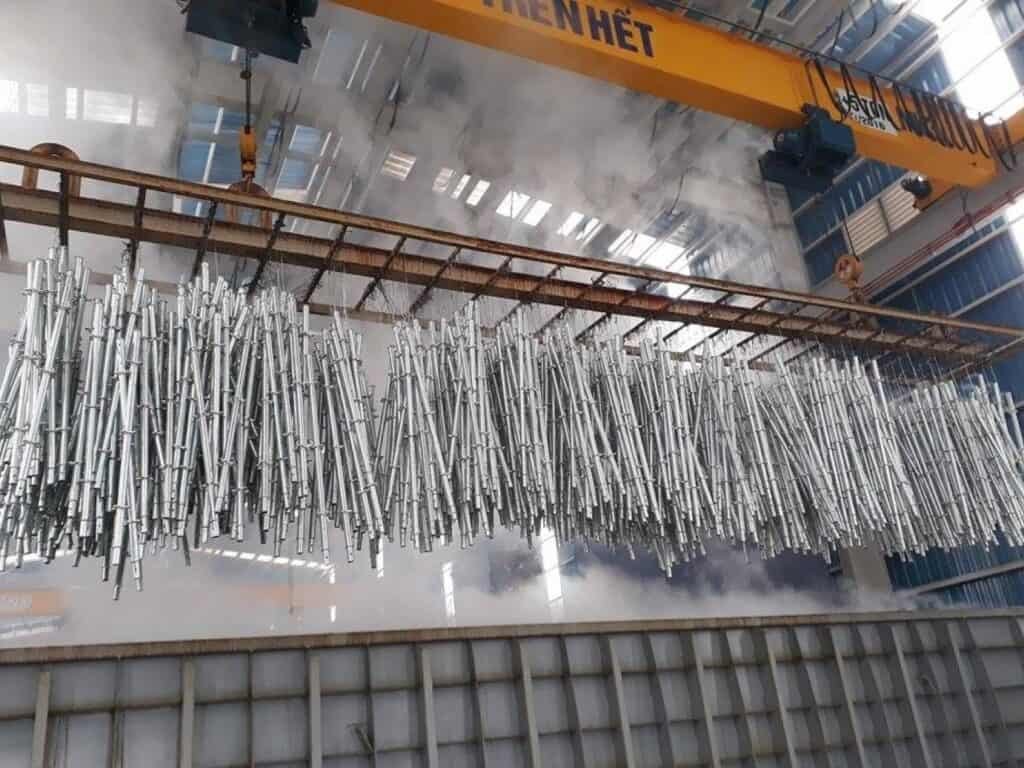
After surface preparation, the steel scaffold components are immersed in a bath of molten zinc. When the steel contacts the molten zinc, a chemical reaction takes place. This forms zinc-iron alloy layers on the steel surface.
This is the key difference between hot-dip galvanizing and ordinary painting. Paint forms a surface film, while hot-dip galvanizing forms a bonded protective layer that becomes part of the steel surface.
The total immersion process also allows zinc to reach corners, edges, welded areas, and the inside of hollow sections. This makes hot-dip galvanizing highly suitable for scaffold tubes and complex scaffold components.
3. Cooling and Inspection
After galvanizing, the scaffold components are removed from the zinc bath, cooled, and inspected. Quality control may include visual inspection, coating thickness checks, surface condition checks, and dimensional checks.
For scaffolding products, inspection is especially important for connection areas. Ringlock rosettes, ledger heads, wedge pins, coupler bolts, and jack threads should remain functional after galvanizing.
Reliable suppliers also pay attention to packaging after galvanizing to reduce surface damage during storage and transportation.
Why Is Hot-Dip Galvanizing Important for Scaffolding?
Scaffolding is a temporary structure, but it must provide reliable support every time it is used. Steel scaffold components are often assembled and dismantled many times during their service life. They are also stored outdoors, transported between projects, and exposed to different weather conditions.
Rust can create several problems for scaffolding:
- It may reduce the wall thickness of steel tubes.
- It may weaken load-bearing capacity over time.
- It may cause couplers, pins, and connection parts to jam.
- It may make scaffold components harder to install and dismantle.
- It may increase maintenance and replacement costs.
Hot-dip galvanized scaffolding helps solve these problems by providing long-lasting corrosion protection. For rental companies and contractors, this means better product turnover, fewer repairs, and improved return on investment.
Main Benefits of Hot-Dip Galvanized Scaffolding
1. Excellent Corrosion Protection
The most important benefit of hot-dip galvanized scaffolding is corrosion resistance. The zinc coating protects the steel in three ways.
First, it provides barrier protection. The zinc coating separates the steel from moisture, oxygen, and corrosive substances.
Second, it provides cathodic protection. If the galvanized coating is scratched, the surrounding zinc can sacrifice itself to help protect the exposed steel.
Third, zinc naturally forms a protective surface layer over time. This zinc patina slows down corrosion and provides an additional barrier against the environment.
This multi-layer protection makes HDG scaffolding suitable for outdoor construction, humid environments, industrial projects, and coastal applications.
2. Longer Service Life
Hot-dip galvanized scaffolding can offer a much longer service life than untreated or painted scaffolding, especially in outdoor environments. Because the zinc coating resists rust, the steel underneath remains protected for a longer period.
For long-term projects, infrastructure work, and scaffold rental businesses, this is a major advantage. Longer service life means fewer replacements, lower maintenance pressure, and better overall cost performance.
3. Strong Durability and Abrasion Resistance
Scaffolding is frequently moved, stacked, loaded, unloaded, assembled, and dismantled. During these processes, the surface coating may be scratched or damaged.
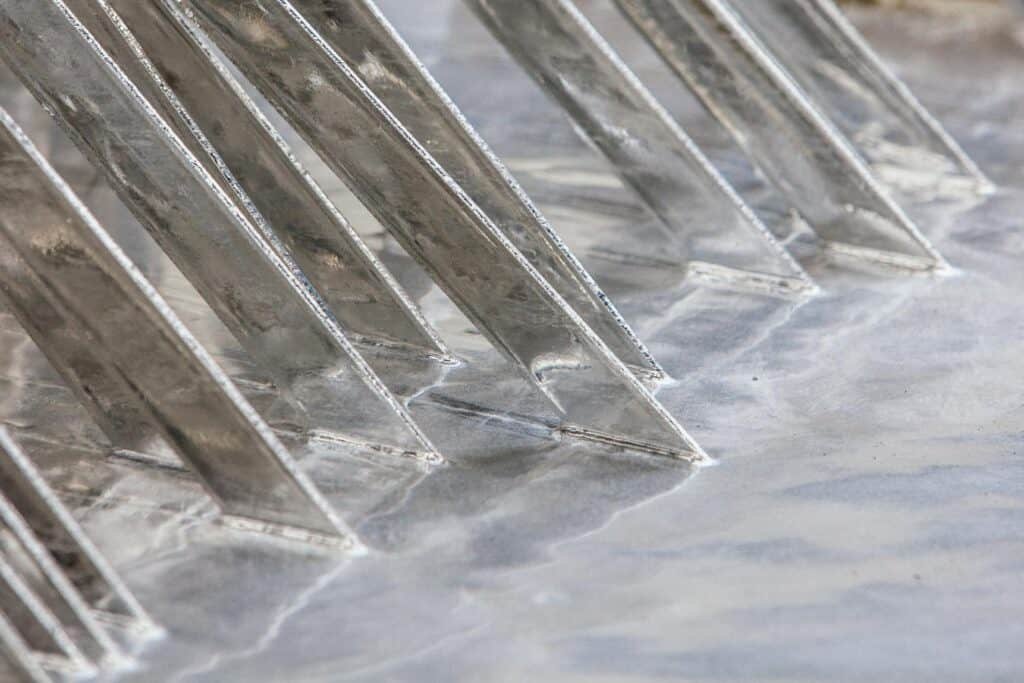
The zinc-iron alloy layers formed during hot-dip galvanizing are tightly bonded to the base steel. This gives the coating strong abrasion resistance and impact resistance. Compared with ordinary paint, the galvanized layer is less likely to peel off during daily handling.
This is especially valuable for scaffold products such as ringlock scaffolding, scaffold tubes, steel planks, and frames, which are repeatedly used on different jobsites.
4. Complete and Uniform Protection
Another major advantage of hot-dip galvanizing is complete coverage. Because the entire scaffold component is immersed in molten zinc, the coating can cover complex surfaces more evenly.
This includes:
- Edges
- Corners
- Welded areas
- Holes
- Internal surfaces of hollow tubes
- Hard-to-reach areas
For scaffolding, this is extremely important. Many scaffold components have welded joints, connection points, and tubular sections. These areas are often more vulnerable to corrosion if they are not fully protected.
Hot-dip galvanizing helps reduce weak points where rust may start.
5. Lower Maintenance Cost
Hot-dip galvanized scaffolding may have a higher initial cost than painted scaffolding, but its long-term maintenance cost is usually lower.
Painted scaffolding may require regular rust removal, repainting, and repair. Once the paint layer is scratched, steel may be exposed directly to moisture and rust can spread from the damaged area.
In contrast, galvanized scaffolding requires less frequent maintenance. The zinc coating continues to protect the steel even when minor scratches occur.
For companies that use scaffolding frequently, the long-term savings can be significant. Reduced maintenance also means less downtime and higher equipment availability.
6. Improved Safety on Site
Safety is one of the most important factors in scaffolding. Corrosion can affect the strength, stability, and connection accuracy of scaffold components.
Hot-dip galvanized scaffolding helps maintain better structural reliability by reducing rust and surface deterioration. This is important for load-bearing parts such as standards, ledgers, braces, scaffold tubes, planks, and base supports.
For ringlock scaffolding, galvanized protection helps keep the rosettes, wedge pins, and ledger heads in better condition. This allows smoother assembly and more stable connections.
While galvanizing does not replace proper scaffold design, inspection, and installation, it plays an important role in improving the long-term reliability of the system.
7. Better Appearance
Hot-dip galvanized scaffolding has a clean silver-gray appearance. This finish looks professional and remains more stable over time compared with painted surfaces that may fade, peel, or show rust spots.
A neat scaffold appearance is useful for projects where site image matters, such as:
- Commercial buildings
- Public infrastructure
- Shopping malls
- Airports
- Hospitals
- Urban renovation projects
The smooth galvanized surface is also easier to clean and maintain.
8. Sustainable and Recyclable
Hot-dip galvanized scaffolding also supports sustainable construction. Steel and zinc are recyclable materials. At the end of the scaffold’s service life, galvanized steel can be recycled and reused.
Because HDG scaffolding lasts longer and requires less maintenance, it can help reduce material waste, repainting, replacement frequency, and resource consumption.
For contractors and project owners focused on long-term environmental value, galvanized scaffolding is a practical and responsible choice.
Hot-Dip Galvanized Scaffolding vs Painted Scaffolding
Artikel | Hot-Dip Galvanized Scaffolding | Painted Scaffolding |
Corrosion Resistance | Excellent | Limited |
Coating Type | Zinc-iron alloy coating | Surface paint film |
Bonding Strength | Metallurgically bonded | Mechanically attached |
Scratch Protection | Zinc provides sacrificial protection | Steel exposed after paint damage |
Wartung | Low | Requires regular repainting |
Service Life | Longer | Shorter |
Appearance | Silver-gray finish | Custom colors available |
Best Use | Outdoor, humid, industrial, long-term projects | Short-term or indoor applications |
Painted scaffolding may be suitable for short-term indoor use or projects with limited exposure to moisture. However, for outdoor, humid, coastal, or industrial environments, hot-dip galvanized scaffolding usually provides better long-term performance.
Hot-Dip Galvanized vs Pre-Galvanized Scaffolding
Pre-galvanized scaffolding and hot-dip galvanized scaffolding are both zinc-coated products, but they are not the same.
Pre-galvanized steel is coated before fabrication. After cutting, welding, punching, or forming, some areas may lose coating protection. Welded areas and cut edges may need additional treatment.
Hot-dip galvanizing is usually applied after fabrication. This means the finished scaffold component is dipped into molten zinc after welding and forming. As a result, welded areas, corners, holes, and edges can receive better zinc coverage.
For heavy-duty scaffolding, outdoor projects, and long-term use, hot-dip galvanized scaffolding is often the preferred option.
Applications of Hot-Dip Galvanized Scaffolding
Hot-dip galvanized scaffolding is suitable for many construction and industrial applications.
Hochbau
Galvanized scaffolding is widely used for residential, commercial, and high-rise building projects. It provides reliable access and support during concrete work, facade work, installation, painting, and maintenance.
Bridge and Road Projects
Infrastructure projects often require scaffolding to work outdoors for long periods. HDG scaffolding can resist rain, dust, and changing weather conditions, making it suitable for bridges, highways, tunnels, and viaducts.
Shipyards and Marine Projects
Marine environments contain high moisture and salt exposure, which can accelerate corrosion. Hot-dip galvanized scaffolding is a strong choice for shipbuilding, ship repair, docks, and offshore-related work.
Power Plants and Refineries
Industrial environments may include chemicals, moisture, and high maintenance demands. Galvanized scaffold systems are commonly used for equipment access, inspection, repair, and shutdown maintenance.
Scaffold Rental
For scaffold rental companies, durability and easy maintenance are essential. Hot-dip galvanized scaffolding can withstand repeated use and transportation, helping rental fleets maintain better condition over time.

What to Consider Before Choosing HDG Scaffolding
Before purchasing hot-dip galvanized scaffolding, buyers should consider the following factors:
- Project environment
- Expected service life
- Load-bearing requirements
- Scaffold system type
- Steel material grade
- Zinc coating quality
- Applicable standards
- Supplier manufacturing capability
- Inspection and packaging quality
- Total lifecycle cost
Choosing the right supplier is just as important as choosing the right surface treatment. Good raw materials, accurate welding, controlled galvanizing, and strict inspection all affect final scaffold performance.
Abschluss
Hot-dip galvanized scaffolding is one of the most reliable choices for projects that require corrosion resistance, durability, safety, and long-term value. Through the hot-dip galvanizing process, scaffold components receive a strong zinc coating that protects steel from rust, reduces maintenance, improves appearance, and extends service life.
Compared with painted or untreated scaffolding, HDG scaffolding offers better protection for outdoor, humid, coastal, and industrial environments. For contractors, rental companies, and project owners, it is a cost-effective investment that supports safer and more efficient construction.
FAQ About Hot-Dip Galvanized Scaffolding
What is hot-dip galvanized scaffolding?
Hot-dip galvanized scaffolding is steel scaffolding coated with zinc by being immersed in molten zinc. The zinc coating protects the steel from rust and corrosion.
Why is hot-dip galvanizing used for scaffolding?
Hot-dip galvanizing is used because scaffolding is often exposed to outdoor weather, moisture, impact, and repeated handling. The zinc coating helps extend service life and reduce maintenance.
Is hot-dip galvanized scaffolding better than painted scaffolding?
For outdoor, humid, coastal, or long-term projects, hot-dip galvanized scaffolding usually performs better than painted scaffolding because it provides stronger corrosion protection and lower maintenance requirements.
Can ringlock scaffolding be hot-dip galvanized?
Yes. Ringlock standards, ledgers, braces, rosettes, wedge pins, and other components are commonly hot-dip galvanized to improve corrosion resistance and durability.
Is galvanized scaffolding suitable for coastal areas?
Yes. Hot-dip galvanized scaffolding is a good choice for coastal and high-humidity environments because the zinc coating helps protect steel against corrosion.


 DE
DE  EN
EN  SV
SV  IT
IT  AR
AR  FR
FR  ES
ES  FI
FI  ET
ET  RU
RU 