Introducción
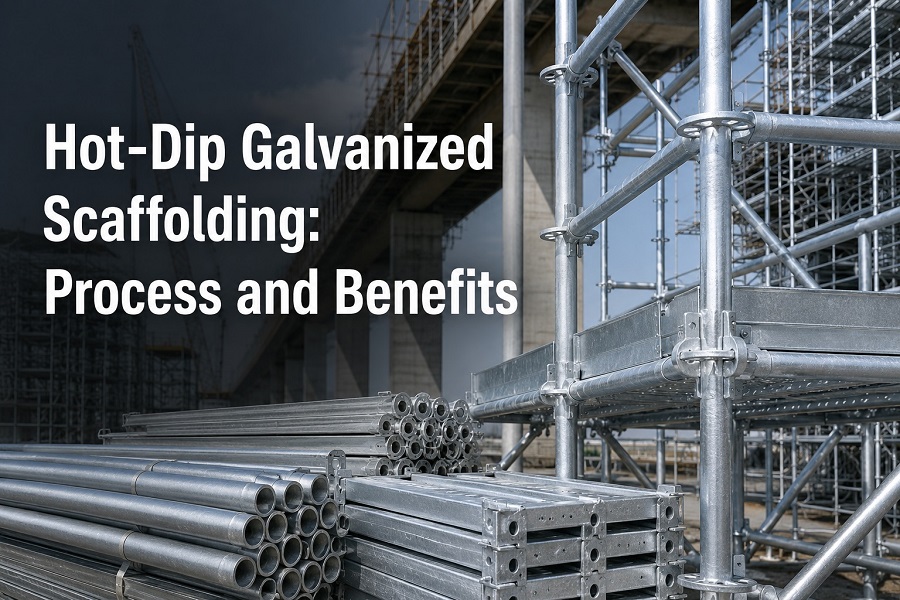
Los andamios se utilizan en algunos de los entornos de construcción más exigentes. Están expuestos a la lluvia, la humedad, el polvo, los impactos, los productos químicos y el montaje y desmontaje repetidos. Sin la protección superficial adecuada, los componentes de acero de los andamios pueden oxidarse, perder resistencia y dificultar su conexión segura.
Por ello, los andamios galvanizados en caliente se utilizan ampliamente en la construcción, el mantenimiento industrial, proyectos de puentes, astilleros, centrales eléctricas y aplicaciones al aire libre. Mediante el proceso de galvanizado en caliente, los componentes de acero de los andamios se recubren con una capa protectora de zinc que ayuda a resistir la corrosión y prolonga su vida útil.
Para contratistas, empresas de alquiler y propietarios de proyectos, los andamios galvanizados no solo se tratan de apariencia. También se trata de durabilidad, seguridad, menor costo de mantenimiento y valor a largo plazo.
¿Qué son los andamios galvanizados por inmersión en caliente?
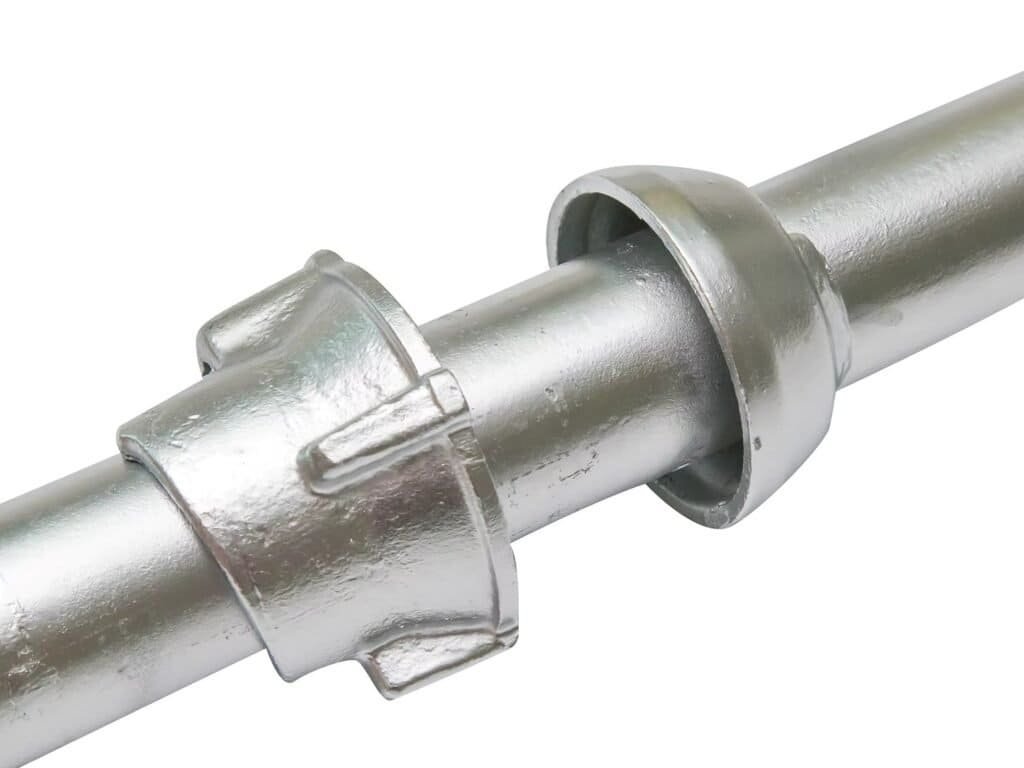
Los andamios galvanizados por inmersión en caliente se refieren a componentes de andamios de acero recubiertos de zinc mediante inmersión en zinc fundido. Durante este proceso, el zinc reacciona con la superficie del acero y forma una capa resistente de aleación de zinc y hierro.
Este revestimiento protector ayuda a prevenir la oxidación y la corrosión, lo que hace que el andamio sea más adecuado para exteriores y entornos adversos.
Entre los productos comunes de andamios galvanizados por inmersión en caliente se incluyen:
- Normas para andamios Ringlock, libros de contabilidad, tirantes y rosetas
- Tubos de andamio
- andamios de marco
- tablones de acero
- Tomas de base y conectores de cabeza en U
- Acopladores de andamios
- Sistemas de escaleras y accesorios
A diferencia de la pintura, la capa galvanizada no solo se adhiere a la superficie, sino que se une metalúrgicamente al acero, lo que hace que el recubrimiento sea más duradero durante el transporte, la instalación y el uso diario en la obra.
¿Cómo funciona el proceso de galvanizado por inmersión en caliente?
El proceso de galvanizado por inmersión en caliente generalmente consta de tres etapas principales: preparación de la superficie, galvanizado e inspección. Cada paso es importante, ya que la calidad final del recubrimiento depende de una limpieza adecuada, una correcta adherencia del zinc y un control de calidad preciso.
1. Preparación de la superficie
Antes de galvanizar, los componentes del andamio deben limpiarse minuciosamente. Cualquier rastro de aceite, óxido, polvo, cascarilla de laminación o residuo de soldadura puede afectar la adherencia entre el zinc y el acero.
La etapa de preparación de la superficie generalmente incluye:
- Desengrasado: elimina el aceite y la grasa de la superficie del acero.
- Decapado: elimina el óxido y la cascarilla de laminación.
- Fundente: prepara la superficie del acero para la reacción con zinc fundido.
- Secado: ayuda a evitar salpicaduras de zinc y mejora la calidad del recubrimiento.
En el caso de los andamios, esta etapa es especialmente importante porque componentes como tubos, montantes con sistema de fijación anular, largueros, tirantes y tablones suelen tener zonas soldadas, agujeros, esquinas y bordes que deben limpiarse adecuadamente antes de aplicar el revestimiento.
2. Inmersión en zinc fundido
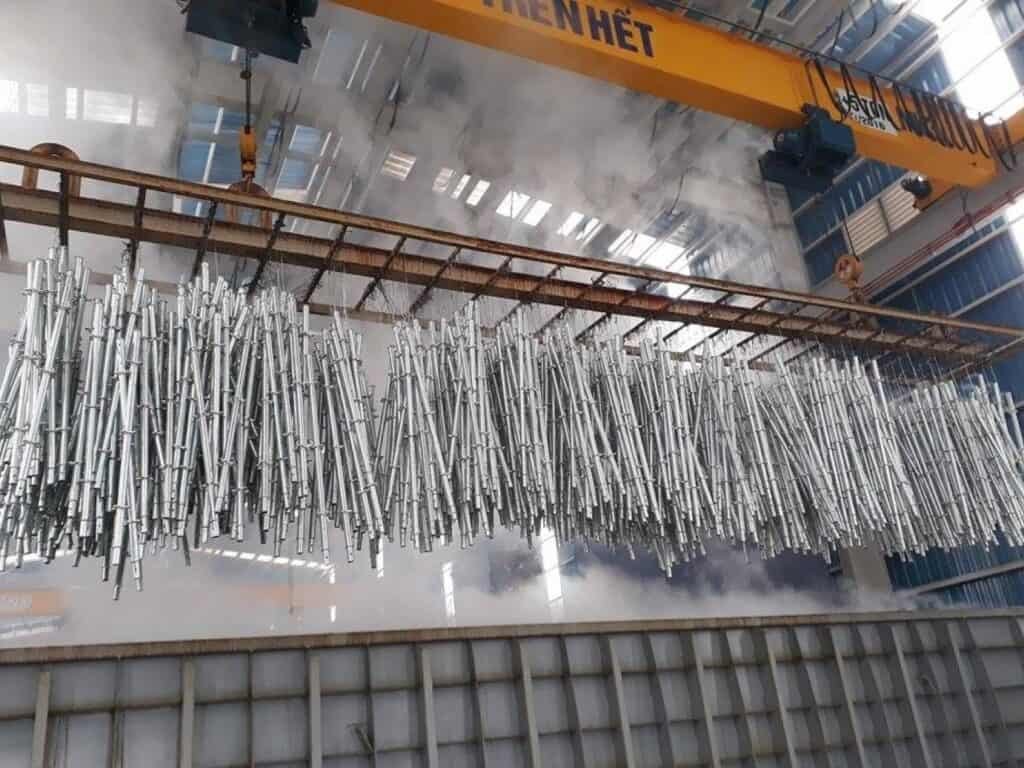
Tras la preparación de la superficie, los componentes del andamio de acero se sumergen en un baño de zinc fundido. Al entrar en contacto el acero con el zinc fundido, se produce una reacción química que forma capas de aleación de zinc-hierro sobre la superficie del acero.
Esta es la diferencia clave entre el galvanizado en caliente y la pintura convencional. La pintura forma una película superficial, mientras que el galvanizado en caliente forma una capa protectora adherida que se integra a la superficie del acero.
El proceso de inmersión total permite que el zinc llegue a esquinas, bordes, zonas soldadas y al interior de secciones huecas. Esto hace que el galvanizado por inmersión en caliente sea muy adecuado para tubos de andamios y componentes complejos de andamios.
3. Refrigeración e inspección
Tras el galvanizado, los componentes del andamio se retiran del baño de zinc, se enfrían y se inspeccionan. El control de calidad puede incluir inspección visual, comprobación del espesor del recubrimiento, comprobación del estado de la superficie y comprobación de las dimensiones.
En el caso de los productos para andamios, la inspección es especialmente importante en las zonas de conexión. Las rosetas Ringlock, los cabezales de los largueros, los pasadores de cuña, los pernos de acoplamiento y las roscas de los gatos deben conservar su funcionalidad tras el galvanizado.
Los proveedores fiables también prestan atención al embalaje posterior al galvanizado para reducir los daños en la superficie durante el almacenamiento y el transporte.
¿Por qué es importante el galvanizado por inmersión en caliente para los andamios?
Los andamios son estructuras temporales, pero deben proporcionar un soporte fiable cada vez que se utilizan. Los componentes de los andamios de acero se montan y desmontan con frecuencia durante su vida útil. Además, se almacenan al aire libre, se transportan entre proyectos y se exponen a diversas condiciones climáticas.
El óxido puede generar varios problemas en los andamios:
- Puede reducir el espesor de la pared de los tubos de acero.
- Con el tiempo, esto puede debilitar su capacidad de carga.
- Puede provocar que los acopladores, los pines y las piezas de conexión se atasquen.
- Esto puede dificultar la instalación y el desmontaje de los componentes del andamio.
- Esto puede aumentar los costos de mantenimiento y reemplazo.
Los andamios galvanizados en caliente ayudan a solucionar estos problemas al proporcionar una protección anticorrosión de larga duración. Para las empresas de alquiler y los contratistas, esto se traduce en una mayor rotación de productos, menos reparaciones y una mejor rentabilidad de la inversión.
Principales ventajas de los andamios galvanizados por inmersión en caliente
1. Excelente protección contra la corrosión.
La principal ventaja de los andamios galvanizados por inmersión en caliente es su resistencia a la corrosión. El recubrimiento de zinc protege el acero de tres maneras.
En primer lugar, proporciona una protección de barrera. El recubrimiento de zinc separa el acero de la humedad, el oxígeno y las sustancias corrosivas.
En segundo lugar, proporciona protección catódica. Si el recubrimiento galvanizado se raya, el zinc circundante puede sacrificarse para ayudar a proteger el acero expuesto.
En tercer lugar, con el tiempo, el zinc forma de forma natural una capa protectora en su superficie. Esta pátina de zinc ralentiza la corrosión y proporciona una barrera adicional contra el medio ambiente.
Esta protección multicapa hace que los andamios HDG sean adecuados para la construcción al aire libre, entornos húmedos, proyectos industriales y aplicaciones costeras.
2. Mayor vida útil
Los andamios galvanizados en caliente ofrecen una vida útil mucho mayor que los andamios sin tratar o pintados, especialmente en exteriores. Gracias a que el recubrimiento de zinc resiste la corrosión, el acero subyacente permanece protegido durante más tiempo.
Para proyectos a largo plazo, obras de infraestructura y empresas de alquiler de andamios, esto supone una gran ventaja. Una mayor vida útil implica menos reemplazos, menor presión de mantenimiento y una mejor relación costo-beneficio.
3. Gran durabilidad y resistencia a la abrasión.
Los andamios se mueven, apilan, cargan, descargan, ensamblan y desmontan con frecuencia. Durante estos procesos, el revestimiento de la superficie puede rayarse o dañarse.
Las capas de aleación de zinc-hierro que se forman durante el galvanizado en caliente se adhieren firmemente al acero base. Esto confiere al recubrimiento una gran resistencia a la abrasión y a los impactos. En comparación con la pintura común, la capa galvanizada es menos propensa a desprenderse durante el uso diario.
Esto resulta especialmente valioso para productos de andamiaje como andamios Ringlock, tubos para andamios, tablones de acero y marcos, que se utilizan repetidamente en diferentes obras.
4. Protección completa y uniforme
Otra gran ventaja del galvanizado por inmersión en caliente es la cobertura total. Dado que todo el componente del andamio se sumerge en zinc fundido, el recubrimiento puede cubrir superficies complejas de manera más uniforme.
Esto incluye:
- Bordes
- Esquinas
- Zonas soldadas
- agujeros
- Superficies internas de tubos huecos
- Zonas de difícil acceso
En el caso de los andamios, esto es de suma importancia. Muchos componentes de los andamios tienen juntas soldadas, puntos de conexión y secciones tubulares. Estas áreas suelen ser más vulnerables a la corrosión si no están completamente protegidas.
El galvanizado en caliente ayuda a reducir los puntos débiles por donde puede comenzar a oxidarse.
5. Menor costo de mantenimiento
Si bien los andamios galvanizados en caliente pueden tener un costo inicial más elevado que los andamios pintados, su costo de mantenimiento a largo plazo suele ser menor.
Los andamios pintados pueden requerir la eliminación regular del óxido, repintado y reparaciones. Una vez que la capa de pintura se raya, el acero puede quedar expuesto directamente a la humedad y el óxido puede extenderse desde la zona dañada.
En cambio, los andamios galvanizados requieren un mantenimiento menos frecuente. El recubrimiento de zinc sigue protegiendo el acero incluso cuando se producen pequeños arañazos.
Para las empresas que utilizan andamios con frecuencia, el ahorro a largo plazo puede ser significativo. Un menor mantenimiento también se traduce en menos tiempo de inactividad y una mayor disponibilidad de los equipos.
6. Mejora de la seguridad en las instalaciones.
La seguridad es uno de los factores más importantes en los andamios. La corrosión puede afectar la resistencia, la estabilidad y la precisión de las conexiones de los componentes del andamio.
El galvanizado en caliente de los andamios contribuye a una mayor fiabilidad estructural al reducir la oxidación y el deterioro superficial. Esto es fundamental para las partes que soportan carga, como los montantes, las vigas de soporte, los tirantes, los tubos, los tablones y los soportes de la base.
En los andamios Ringlock, la protección galvanizada ayuda a mantener en mejores condiciones las rosetas, los pasadores de cuña y los cabezales de los largueros. Esto permite un montaje más sencillo y conexiones más estables.
Si bien el galvanizado no sustituye un diseño, inspección e instalación adecuados del andamio, desempeña un papel importante en la mejora de la fiabilidad a largo plazo del sistema.
7. Mejor apariencia
Los andamios galvanizados en caliente tienen un aspecto limpio de color gris plateado. Este acabado luce profesional y se mantiene más estable con el tiempo en comparación con las superficies pintadas, que pueden decolorarse, descascararse o mostrar manchas de óxido.
Una apariencia cuidada del andamio es útil para proyectos donde la imagen del sitio es importante, como por ejemplo:
- Edificios comerciales
- Infraestructura pública
- centros comerciales
- Aeropuertos
- hospitales
- Proyectos de renovación urbana
La superficie galvanizada lisa también facilita su limpieza y mantenimiento.
8. Sostenible y reciclable
Los andamios galvanizados en caliente también contribuyen a la construcción sostenible. El acero y el zinc son materiales reciclables. Al final de la vida útil del andamio, el acero galvanizado puede reciclarse y reutilizarse.
Debido a que los andamios galvanizados en caliente duran más y requieren menos mantenimiento, pueden ayudar a reducir el desperdicio de material, la necesidad de repintar, la frecuencia de reemplazo y el consumo de recursos.
Para los contratistas y propietarios de proyectos que priorizan el valor ambiental a largo plazo, los andamios galvanizados son una opción práctica y responsable.
Andamios galvanizados en caliente frente a andamios pintados
|
Artículo |
Andamios galvanizados por inmersión en caliente |
Andamios pintados |
|
Resistencia a la corrosión |
Excelente |
Limitado |
|
Tipo de recubrimiento |
Recubrimiento de aleación de zinc y hierro |
película de pintura superficial |
|
Fuerza de unión |
Enlazado metalúrgicamente |
Fijado mecánicamente |
|
Protección contra arañazos |
El zinc proporciona protección de sacrificio |
Acero expuesto tras daños por pintura |
|
Mantenimiento |
Bajo |
Requiere repintado regular. |
|
Vida de servicio |
Más extenso |
Más corto |
|
Apariencia |
Acabado gris plateado |
Colores personalizados disponibles |
|
Mejor uso |
Proyectos a largo plazo en exteriores, ambientes húmedos e industriales. |
Aplicaciones a corto plazo o en interiores |
Los andamios pintados pueden ser adecuados para uso interior a corto plazo o para proyectos con exposición limitada a la humedad. Sin embargo, para exteriores, ambientes húmedos, costeros o industriales, los andamios galvanizados en caliente suelen ofrecer un mejor rendimiento a largo plazo.
Andamios galvanizados en caliente frente a andamios pregalvanizados
Los andamios pregalvanizados y los andamios galvanizados por inmersión en caliente son productos recubiertos de zinc, pero no son lo mismo.
El acero pregalvanizado se recubre antes de su fabricación. Tras el corte, la soldadura, el punzonado o el conformado, algunas zonas pueden perder la protección del recubrimiento. Las zonas soldadas y los bordes cortados pueden requerir un tratamiento adicional.
El galvanizado por inmersión en caliente se aplica generalmente después de la fabricación. Esto significa que el componente terminado del andamio se sumerge en zinc fundido después de la soldadura y el conformado. Como resultado, las áreas soldadas, las esquinas, los orificios y los bordes reciben una mejor cobertura de zinc.
Para andamios de alta resistencia, proyectos al aire libre y uso a largo plazo, los andamios galvanizados por inmersión en caliente suelen ser la opción preferida.
Aplicaciones de andamios galvanizados por inmersión en caliente
Los andamios galvanizados por inmersión en caliente son adecuados para numerosas aplicaciones en la construcción y la industria.
Construcción de edificios
Los andamios galvanizados se utilizan ampliamente en proyectos de construcción residenciales, comerciales y de gran altura. Proporcionan acceso y soporte fiables durante trabajos de hormigón, fachadas, instalación, pintura y mantenimiento.
Proyectos de puentes y carreteras
Los proyectos de infraestructura suelen requerir andamios para trabajar al aire libre durante largos periodos. Los andamios galvanizados en caliente (HDG) resisten la lluvia, el polvo y las inclemencias del tiempo, lo que los hace idóneos para puentes, autopistas, túneles y viaductos.
Astilleros y proyectos marítimos
Los entornos marinos presentan altos niveles de humedad y exposición a la sal, lo que puede acelerar la corrosión. Los andamios galvanizados en caliente son una excelente opción para la construcción naval, la reparación de buques, los muelles y los trabajos relacionados con plataformas marinas.
Centrales eléctricas y refinerías
Los entornos industriales pueden incluir productos químicos, humedad y altas exigencias de mantenimiento. Los sistemas de andamios galvanizados se utilizan habitualmente para el acceso a equipos, la inspección, la reparación y el mantenimiento durante paradas programadas.
Alquiler de andamios
Para las empresas de alquiler de andamios, la durabilidad y el fácil mantenimiento son esenciales. Los andamios galvanizados en caliente resisten el uso y el transporte repetidos, lo que ayuda a que las flotas de alquiler se mantengan en mejores condiciones con el paso del tiempo.

Qué tener en cuenta antes de elegir andamios HDG
Antes de adquirir andamios galvanizados por inmersión en caliente, los compradores deben tener en cuenta los siguientes factores:
- Entorno del proyecto
- Vida útil prevista
- Requisitos de carga
- Tipo de sistema de andamios
- Grado del material de acero
- calidad del recubrimiento de zinc
- Normas aplicables
- Capacidad de fabricación del proveedor
- Calidad de inspección y embalaje
- Coste total del ciclo de vida
Elegir al proveedor adecuado es tan importante como elegir el tratamiento superficial correcto. Las buenas materias primas, la soldadura precisa, el galvanizado controlado y la inspección rigurosa influyen en el rendimiento final del andamio.
Conclusión
Los andamios galvanizados en caliente son una de las opciones más fiables para proyectos que requieren resistencia a la corrosión, durabilidad, seguridad y un valor a largo plazo. Mediante el proceso de galvanizado en caliente, los componentes del andamio reciben un recubrimiento de zinc resistente que protege el acero de la oxidación, reduce el mantenimiento, mejora su aspecto y prolonga su vida útil.
En comparación con los andamios pintados o sin tratar, los andamios galvanizados en caliente (HDG) ofrecen mayor protección en exteriores, ambientes húmedos, costeros e industriales. Para contratistas, empresas de alquiler y propietarios de proyectos, representan una inversión rentable que contribuye a una construcción más segura y eficiente.
Preguntas frecuentes sobre andamios galvanizados por inmersión en caliente
¿Qué es un andamio galvanizado por inmersión en caliente?
Los andamios galvanizados por inmersión en caliente son andamios de acero recubiertos de zinc mediante inmersión en zinc fundido. Este recubrimiento de zinc protege el acero contra la oxidación y la corrosión.
¿Por qué se utiliza el galvanizado en caliente para los andamios?
El galvanizado en caliente se utiliza porque los andamios suelen estar expuestos a la intemperie, la humedad, los impactos y la manipulación repetida. El recubrimiento de zinc ayuda a prolongar su vida útil y a reducir el mantenimiento.
¿Es mejor el andamio galvanizado en caliente que el andamio pintado?
Para proyectos al aire libre, en ambientes húmedos, costeros o de larga duración, los andamios galvanizados en caliente suelen ofrecer un mejor rendimiento que los andamios pintados, ya que proporcionan una mayor protección contra la corrosión y requieren menos mantenimiento.
¿Se pueden galvanizar por inmersión en caliente los andamios Ringlock?
Sí. Los montantes, travesaños, tirantes, rosetas, pasadores de cuña y otros componentes de Ringlock suelen estar galvanizados en caliente para mejorar su resistencia a la corrosión y su durabilidad.
¿Son adecuados los andamios galvanizados para zonas costeras?
Sí. Los andamios galvanizados por inmersión en caliente son una buena opción para entornos costeros y de alta humedad, ya que el recubrimiento de zinc ayuda a proteger el acero contra la corrosión.