


Introduction
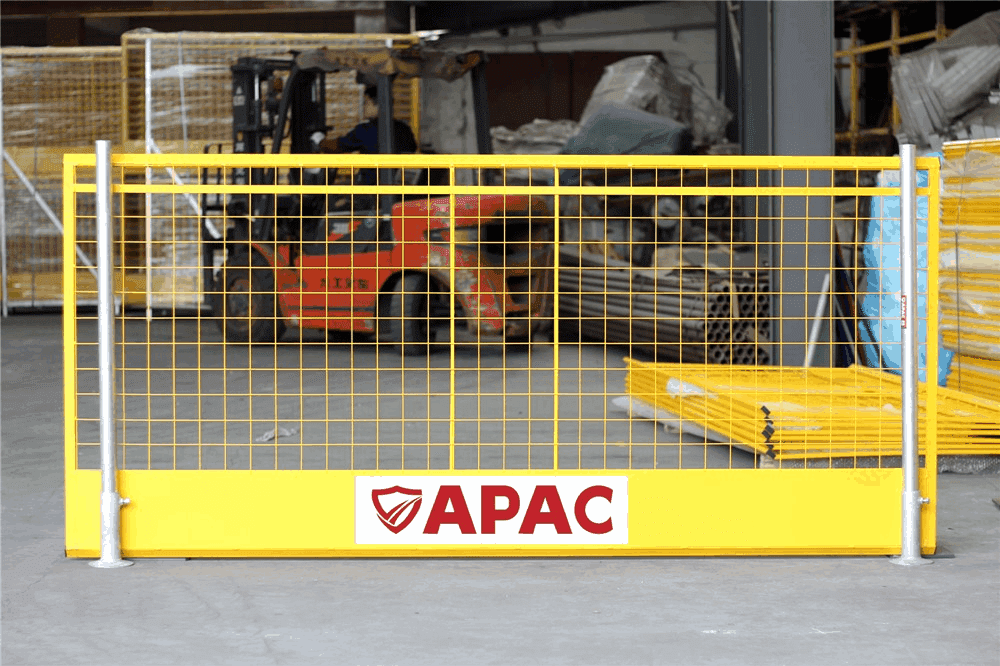
La norme BS EN 13374:2025 constitue une révision majeure de la norme 2013+A1:2018 relative aux systèmes de protection temporaire des bords. Elle lève les ambiguïtés antérieures, renforce les exigences de performance et introduit de nouveaux protocoles d'essai visant à améliorer la sécurité antichute sur les chantiers européens. Ce guide examine les principales différences entre les deux versions et explique leur impact sur les fabricants, les entreprises de construction et les exportateurs.
Aperçu rapide à la table
Fonctionnalité | BS EN 13374:2013+A1:2018 | BS EN 13374:2025 |
Besoins énergétiques de classe C | 2200 J (méthode d'essai contredite) | Corrigé à 3185 J |
Test de retrait accidentel | Lignes directrices générales de conception uniquement | Essai de force ascendante obligatoire de 300 N |
Tolérances d'écartement (plinthes) | ≤ 20 mm (verticalement uniquement) | ≤ 20 mm (vertical et horizontal) |
Écarts post-impact de classe B | Non spécifié | Aucune ouverture ≥ 250 mm après impact |
Annexe C – Écarts nationaux | Non inclus | Liste détaillée pour le Royaume-Uni, la Finlande, la Pologne, Chypre et l'Italie |
Annexe B – Tests simplifiés | Non inclus | Permet une coupure à 2,5 fois la charge maximale |
Le tableau ci-dessus offre un aperçu rapide, mais il est essentiel de bien comprendre les implications de chaque modification. Vous trouverez ci-dessous les explications détaillées et les impacts commerciaux de chaque révision majeure.
1. Clarification de l'absorption d'énergie dynamique pour la classe C (mise à jour majeure)
Référence du document :
- Norme 2013 : Article 5.4.4 et méthode d'essai 7.5.2
- Norme 2025 : La clause 5.4.4 (mise à jour) est alignée sur la clause 7.5.2.
Détail:
Dans la version 2013, la clause 5.4.4 stipulait que les systèmes de classe C devaient absorber 2 200 J d'énergie cinétique. Or, l'essai dynamique décrit à la clause 7.5.2 – une masse de 75,5 kg dévalant une pente de 5 m sur un plan incliné à 60° – génère environ 3 185 J d'énergie. Il en résultait une contradiction entre les critères de performance et l'essai requis.
La norme BS EN 13374:2025 corrige ce problème en mettant à jour la clause 5.4.4 pour exiger explicitement la norme 3185 J, alignant ainsi l'exigence sur la configuration de test physique décrite en 7.5.2. Il ne s'agit pas d'une amélioration des performances, mais d'une correction visant à éliminer une incohérence interne.
Implication:
Les fabricants dont les systèmes de classe C ont réussi le test initial en 2013 satisfont probablement déjà aux exigences de 2025. Cependant, la documentation doit désormais mentionner la norme 3185 J pour rester valide.
2. Nouvel essai de charge statique pour le retrait accidentel de composants (article 6.3.8)
Référence du document :
- Norme 2013 : Article 5.1.1 (non spécifique)
- Norme 2025 : Article 6.3.8
Détail:
La version 2013 mentionnait de manière générale que les composants devaient être conçus pour éviter tout retrait accidentel, mais ne fournissait aucune méthode de test ni exigence quantifiable.
La norme BS EN 13374:2025 introduit un test spécifique (article 6.3.8) pour le “ retrait accidentel ”, exigeant que chaque composant clé (par exemple, poteaux, garde-corps, plinthes) résiste à une force ascendante de 300 N. Alternativement, s'ils sont conçus pour se détacher, le système doit permettre un déplacement vertical d'au moins 100 mm avant le déverrouillage.
Exception pour le Royaume-Uni :
L’annexe C de la version 2025 stipule que la réglementation britannique relative au travail en hauteur interdit une tolérance de 100 mm. Les systèmes conformes aux normes britanniques doivent “ empêcher raisonnablement ” tout mouvement de ce type.
Implication:
Les fabricants doivent désormais vérifier que les composants, notamment ceux qui reposent sur la gravité ou un ajustement par friction, respectent cette résistance ou intègrent des dispositifs de verrouillage. Cette modification établit un critère clair et vérifiable pour une exigence auparavant imprécise.
3. Limites d'espacement plus strictes (plinthes et espaces post-impact)
Référence du document :
- Norme 2013 : Article 5.1.5
- Norme 2025 : Articles 5.1.5 et 7.5.1.5
Détail:
La version 2013 ne limitait que verticale L'espace sous la plinthe est désormais limité à 20 mm. La version 2025 limite également cet espace. horizontal écarts entre les plinthes segmentées jusqu'à 20 mm.
De plus, une nouvelle exigence de la clause 7.5.1.5 stipule qu'après les essais dynamiques de classe B (impact de 1100 J), aucun interstice ne doit exister dans le système qui permettrait à une sphère de 250 mm de passer.
Implication:
Les conceptions utilisant plusieurs segments de plinthe doivent garantir des joints très précis. Les systèmes de classe B doivent être suffisamment robustes pour résister à toute déformation lors d'un impact susceptible de créer des ouvertures dangereuses.
4. Annexe C – Écarts nationaux
Référence du document :
- Norme 2025 uniquement : Annexe C informative
Détail:
L’annexe C (nouveauté 2025) récapitule les dérogations obligatoires imposées par les réglementations nationales de sécurité en Europe :
- Finlande: Exige que les poteaux et les lisses supérieures des garde-corps résistent à une charge ponctuelle de 1,0 kN (contre 0,3 kN selon la norme EN).
- Chypre et la Pologne : Exiger une hauteur minimale de garde-corps de 1,1 m (la hauteur standard EN est de 1,0 m).
- ROYAUME-UNI: Interdit la tolérance de mouvement de 100 mm dans les tests de retrait accidentel (voir clause 6.3.8).
- Italie: N'accepte que les systèmes conformes au décret législatif national 81/08.
Implication:
Le marquage CE ne garantit plus à lui seul un accès complet au marché. Les fabricants et les exportateurs doivent désormais adapter leurs systèmes aux réglementations locales, plus strictes, de chaque pays. Les produits standardisés ne sont plus forcément adaptés à une distribution paneuropéenne.
5. Annexe B – Méthode d’essai simplifiée
Référence du document :
- Norme 2025 uniquement : Annexe informative B, article B.1
Détail:
Dans la version 2013, les systèmes devaient être testés jusqu'à “ défaillance identifiable ”, nécessitant souvent un effondrement structurel complet – un processus coûteux et nécessitant beaucoup d'équipement.
La norme BS EN 13374:2025 introduit une mesure d'économie dans l'annexe B.1 : si un système résiste à une charge égale à 2,5 fois la charge maximale requise sans montrer de signes de défaillance, une charge supplémentaire est inutile.
Implication:
Les systèmes surdimensionnés et dotés de marges de sécurité importantes peuvent désormais éviter les essais destructifs. Cela permet de réduire les délais, les coûts de laboratoire et les limitations des bancs d'essai, ce qui est particulièrement avantageux pour les systèmes modulaires dont la résistance est éprouvée.
Ce que vous devez faire maintenant
Pour les fabricants
Les systèmes doivent être repensés ou vérifiés afin de satisfaire aux exigences actualisées de l'essai statique prévues à la clause 6.3.8. Cela inclut l'intégration de mécanismes de verrouillage empêchant le soulèvement des composants tels que les poteaux et les garde-corps. De plus, la documentation des produits de classe C doit être révisée afin d'attester de leur conformité à l'exigence corrigée d'absorption d'énergie de 3185 J. Les systèmes dont la résistance dépasse les marges admissibles doivent appliquer le protocole simplifié de l'annexe B afin de réduire les coûts d'essai.
Pour les entrepreneurs
Lors de l'approvisionnement en polystyrène expansé (EPS), assurez-vous que les jeux horizontaux et verticaux des plinthes ne dépassent pas 20 mm et vérifiez que les systèmes de classe B conservent leur intégrité structurelle après impact. Examinez les déclarations des fournisseurs afin de confirmer leur conformité avec les nouveaux résultats d'essais et les normes nationales.
Pour les exportateurs et les distributeurs
Utilisez l'annexe C comme liste de contrôle de conformité pour chaque marché de destination. Par exemple, assurez-vous que les produits destinés à la Finlande supportent une charge de 1,0 kN, ou que ceux destinés à Chypre et à la Pologne respectent la hauteur de garde-corps de 1,1 m. Les produits destinés au Royaume-Uni doivent impérativement éviter tout jeu vertical de 100 mm en cas de démontage accidentel. L'adaptation régionale est désormais indispensable pour la conformité CE/UKCA.
Résumé : Une norme plus claire, plus stricte et plus pratique
Bien que cet article mette en lumière les principaux changements, il est important de comprendre que la norme BS EN 13374:2025 couvre un ensemble complet d'exigences techniques, structurelles et réglementaires qui vont bien au-delà de cette présentation. Le document complet contient des spécifications détaillées auxquelles les professionnels doivent se conformer pour garantir la conformité, la sécurité des produits et la certification.
Spécialistes des systèmes de protection des bords (EPS), nous nous concentrons sur la production et la fourniture de ces systèmes. Nous accompagnons les acheteurs du secteur de la construction, les promoteurs de projets et les distributeurs d'équipements dans leur recherche de solutions conformes à la norme EN 13374. Si votre projet ou votre processus d'approvisionnement requiert des systèmes certifiés pour une utilisation sur les marchés européens, britanniques ou internationaux, nous sommes là pour simplifier vos approvisionnements grâce à des solutions prêtes à fabriquer et conformes aux dernières spécifications.



 FR
FR  EN
EN  SV
SV  IT
IT  AR
AR  DE
DE  ES
ES  FI
FI  ET
ET  RU
RU 