



Introduction
Thousands of construction workers are injured each year as a result of falling debris with many incidents happening as a result of inadequate protection systems. The International Labour Organization (ILO) reports that construction sites are major sources of injuries and deaths through falling debris and this is why the appropriate safety measures need to be taken.
The best method of reducing these risks is through the use of debris netting. However, there are different kinds of the nets we have to use in cleaning up the debris, so the question is what kind of net is suitable to use in your project. Within this guide, we shall define the term of debris netting, its relevance, types of the same, and the manner in which one can select the most appropriate netting in their construction site.
What is debris netting?
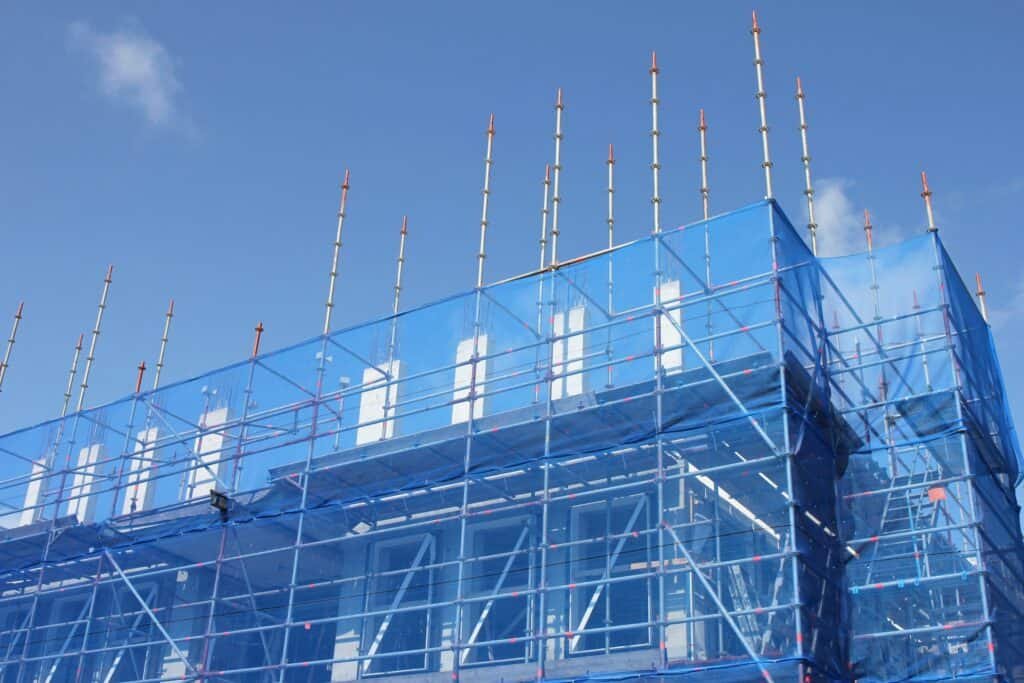
Debris netting refers to the safety mechanism employed in construction sites to trap and hold construction materials, debris, and tools, which can fall at a height. It is usually put in scaffoldings, facades or elevated work places to ensure that falling objects do not hit the ground below thereby ensuring that the workers, pedestrians and other installed facilities are safe.
Debris netting is created using high-strength synthetic materials which are of durable and wear-resistant properties specifically polypropylene or polyethylene. Although it is used to prevent the escape of debris, it still lets air flow in, making the windscreen less resistant to it and ensuring that the net is not too overloaded.
Construction Debris netting types
Standard Debris Netting
In most common construction setups, standard netting of debris is applied. This form of netting is made of polypropylene or polyethylene and can withstand most of the smaller debris such as tools, equipment and construction materials. It is widely employed in scaffoldings and in the exterior of buildings in residential and commercial constructions.
- Material: Polypropylene or polyethylene.
- Mesh Size: This is normally 3mm to 10mm to trap small debris and yet leave the air free.
- Application: Scaffolding and facade work in general.

Heavy-Duty Debris Netting
Heavy-duty netting of the debris is necessary in projects that include heavier debris, which include bridge construction, shipyards, or industrial premises. Such nets are constructed using stronger and more thick materials that are capable of withstanding the effects of bigger debris. It is also designed to meet the increased carrying capacities and extreme environment.
- Material: Heavy-duty polyethylene.
- Mesh Size: Openings in the mesh are bigger to hold heavy materials.
- Application: Construction of industries, high-rise buildings, bridge constructions.

Flame Retardant Debris Netting
Flame retardant debris netting is applied in places where there are concerns of fire and includes hot work, close to the welding area, or shipyards. The nets have fire resistant chemicals that ensure that the net does not catch fire and contain any sparks or embers that may fall during working.
- Material: Flame-retardant-treated polypropylene or polyethylene
- Application: Areas with welding, cutting, or other high-heat operations
UV-Stabilized Debris Netting
UV-stabilized debris netting is used in projects that are subjected to unlimited sunlight. The netting is impregnated with UV inhibitors so that it does not degenerate and the net remains strong and has a long life even when it is subjected to the sun over an extended time period. This kind of netting is suitable in outdoor construction or long-term construction projects so that the netting can be used over a long period of time.
- Material: UV-stabilized polypropylene or polyethylene
- Application: Long-term outdoor projects exposed to direct sunlight
Custom Debris Netting
In special projects, special debris netting can be made to fit the special requirements. This can be any of the custom mesh sizes, branding, colors, or other additional coating such as anti-fungal or anti-alkali. Specialized nets are flexible enough to suit a special construction setting like tunnels, refineries, or shipyards.
- Material: Customized material options
- Application: Specific, custom projects like industrial maintenance or highly visible projects requiring branding
Materials of Debris Netting
The materials used in the manufacture of debris netting include:
1. High-Density Polyethylene (HDPE)
Properties:
- Tensile Strength: HDPE is reputed to be very strong in tensile strength and therefore can withstand the effects of falling body.
- UV Resistance: HDPE is very resistant to UV rays and this means that the netting will not deteriorate easily when it is exposed to the sun hence it can be used in the outdoor.
- Durability: HDPE netting is durable and can be applied to a lot of abrasive conditions, even with the harsh environment, and it is regularly applied in the standard debris netting.
- Typical Uses: Construction sites in general, scaffolding, and facade protection.
2. Polyester
Properties:
- Heavy-Duty Strength: Polyester netting can be utilized in heavy-duty application as it is strong and resistant to abrasion.
- Knitted Netting: Knitted netting is frequently used when it comes to knitted netting, which is more flexible and strong.
- Weather Resistance: Polyester netting is not as UV resistant as HDPE, but it can be used in relatively harsh conditions.
- Common Applications: This is used in industries where mechanical stresses and durability are critical like in demolition or the industrial setting.
3. Polypropylene (PP)
Properties:
- Flexibility: Polypropylene is a very flexible substance, which is easier to operate and install in the environment where netting should be more flexible to fit irregular forms.
- Lightweight: It is not heavy like HDPE or polyester and this may facilitate handling and installation when the construction work is small or temporary.
- Moderate Durability: PP has sufficient protection to withstand applications of less critical use, although it might not be as long-lasting and may not be resistant to UV as HDPE.
- Common Applications Suitable in smaller construction works, scaffolding, or places that are not extreme to the UV light and harsh weather.
4. PVC-Coated Polyester
Properties:
- High Strength: This is a material with high degree of strength thus, it is applicable in projects that require high durability.
- Abrasion Resistance: PVC-coated polyester has a higher abrasion resistance than conventional polyester and provides high service life under severe conditions.
- Waterproof: The PVC coating offers additional water protection, which is very important in places that are likely to be exposed to rain or any form of moisture.
- UV Protection: This material can also be used to offer high UV protection guaranteeing the longevity of this material even when it is used due to prolonged exposure to sunlight.
- Common Applications: Applied in places of high mechanical load or rough conditions, e.g. industrial places, offshore construction, or projects with an increased load of durability.
💡 Pro Tip from Experts: Selecting the wrong mesh size can lead to compliance failure. Not sure which one fits your project?
Another significant design feature is the Mesh Size. The holes that will be used on the netting depending on the number of holes will depend on the effectiveness of netting that will be used to catch debris. Smaller mesh sizes (3mm-5mm) would be recommended to entrap smaller objects, e.g. tools or nuts and bolts. Smaller mesh sizes (less than 10mm) can be applied to smaller heavier debris.
Stronger edges do not allow the netting to be torn or worn out during its use, so it becomes durable in terms of its lifespan. Higher strength applications are sometimes done with knotted designs, whereas knotless designs are done with a smoother surface which is less susceptible to tangling.
Key Benefits of Debris Netting in Construction
Worker Safety:
Debris netting is significant because of its protection of the ground workers, particularly in the building of high-rise buildings or bridges, where the workers are at risk of being hit by tools or materials falling down off the high level.
It considerably lowers the risk of getting injured by the dropping objects such as small tools or heavy materials.
Public Protection:
In construction sites where buildings are in close proximity to the roads or other people, the use of the netting of debris is to ensure that even the falling debris does not hit pedestrians or other vehicles. This insurance is essential in crowded city areas where constructions are usually very close to the people.
Damage Prevention:
Besides safeguarding citizens, the netting of debris serves to safeguard the surrounding properties. It could be cars, neighboring buildings or infrastructure but the netting will make sure that falling debris is not going to end up causing unintended damage and will save time as well as money.
Dust and Noise Control:
Debris netting may assist in the management of dust and noise in areas surrounding a construction site, thus it will be more friendly to environment and meet local regulations. This is particularly essential in the homes or cities.
Compliance:
Debris netting assures that construction sites are organized in accordance with the safety standards demanded by the regulatory authorities like OSHA, EN 1263 and AS/NZS 1891, which can help avoid legal issues and penalties.

How to Choose the Right Debris Netting for Your Project
Pre-Installation Planning
Before installation begins, a proper site assessment is essential. This includes evaluating building height, exposure to wind, and the type of work being carried out. Projects involving demolition or heavy materials will require stronger and more durable netting compared to light-duty applications.
Material selection should also be aligned with project conditions. For example, HDPE netting is commonly used for general construction due to its UV resistance and durability, while PVC-coated polyester may be preferred in harsher environments. Ensuring compliance with local regulations is equally important, especially for projects in markets such as the UK, EU, or North America.
Adequate Installation practices
Debris netting should be firmly attached to the scaffold construction so that it does not move or fall off. It must be fixed on with strong ties, clips or fastening systems which can resist wind loads and site activity.
It is of paramount importance to keep the tension. The netting has to be tight in order to prevent the netting to be slack such that it is not likely to hang and cause debris accumulation and overloading of the structure. Loose netting not only lowers effectiveness but it may also prove to be a source of other hazards.
In cases where several sections are applied, there should be overlaps to remove gaps. The seams must be fastened appropriately to provide full coverage particularly in high rise projects where chances of falling debris are higher.
Inspection and Routine Maintenance
There should be regular check up to maintain constant performance. This type of netting must not have tears, fraying, or loose fixings, and is especially to be examined after a solid wind or much use. Any destroyed parts should be mended or substituted instantly.
Also, a close watch should be kept on fastening points. Ties and connectors can loosen or become degenerate with time, particularly outdoors. The netting is not as essential as the maintenance of secure attachment.
Debris or dusty areas may require cleaning. Washing out dirt should ensure that the visibility and the performance of the material is not compromised however care should be taken to ensure that the material is not destroyed during the process of washing out of the dirt.
Weather and Environmental Considerations
Debris netting is always exposed to environmental effects, which may affect its life span. Strong winds may also create a lot of stress on the netting and where there is a continuous exposure to the UV, materials may become weaker over time.
Additional reinforcement or more frequent checks could be required in places where there is extreme weather. The probability of failure during the project can be greatly mitigated by planning ahead in case of such circumstances.
Replacement and Lifecycle Management
The service life of all nettings used in the reinsurance of the reelin is finite. Even the high-quality materials will wear out with time because of the exposure to UV, mechanical forces, and the environment. The state of the netting can be monitored to understand that it needs to be replaced.
Damaged or old nettings are dangerous and they could result in impunity to site regulations. One of the elements of the safe and professional construction environment is proactive replacement.
Best Practices in the installation and maintenance of Debris netting
Correct Installation:
- Make sure that the netting is well anchored to prevent it from sagging.
Install the netting using strong materials that cannot be detached in strong winds or when it is loaded with heavy materials.
Routine Inspections:
- Have wear and tear and UV degradation checked on a regular basis.
- Any broken or corrupted nets should be replaced as soon as they are not safe.
Maintenance:
- Remember to nett off big things to prevent overworking.
Wipe off the netting to get rid of dust and make sure that it is in proper working condition.
Common Mistakes When Using Debris Netting
Incorrect Sizing:
The netting should not be selected with a too large netting size because the netting size should be such that it does not permit the debris to pass through the net and negate the safety role.
Neglecting Maintenance:
Failure to wash or check netting after some time may decrease its efficiency and cause a rise in the risk of accidents.
Improper Installation:
Failure may occur due to improper installation, e.g. poor anchoring points, or slack in netting.
Choosing Low-Quality Netting:
The netting of low quality and cheaper alternatives looks cost-effective in the short term but can lead to net failures and subsequent replacement costs in the long term.

Conclusion
Debris netting is an important element in the construction site safety. It averts the damage that could be inflicted on workers, pedestrians and property by falling debris which might be reaching the ground. Once you have determined the type of debris that will be used in your project, the correct choice of the debris netting is based on the site conditions, the material used, adherence of the safety standards and the kind of debris anticipated.
When installed properly, with regular inspection, and maintenance, the debris netting is very beneficial in ensuring construction projects maintain their schedule and also remember the safety factor as a priority. On your next construction site, are you ready to improve safety? Today, contact a certified supplier in order to have the best-quality debris netting in your project.
Faqs
Q: How long does UV-stabilized netting last?
A: Depending on the sunlight intensity, high-quality UV-stabilized PE netting typically lasts 2 to 5 years in outdoor environments.
Q: Does debris netting meet OSHA fall protection requirements?
A: Debris netting is primarily for falling objects. For personnel fall arrest, you must use specifically rated Safety Personnel Nets (ANSI A10.11).
Q: How much does debris netting cost?
A: The cost of debris netting varies depending on the material, size, customization options, and whether it meets specific safety standards (e.g., flame retardant or UV resistant). Generally, standard debris netting is affordable, while heavy-duty or flame-retardant options can be more expensive. It is important to balance cost with quality and durability to ensure long-term safety and compliance.


 EN
EN  SV
SV  IT
IT  AR
AR  DE
DE  FR
FR  ES
ES  FI
FI  ET
ET  RU
RU 