
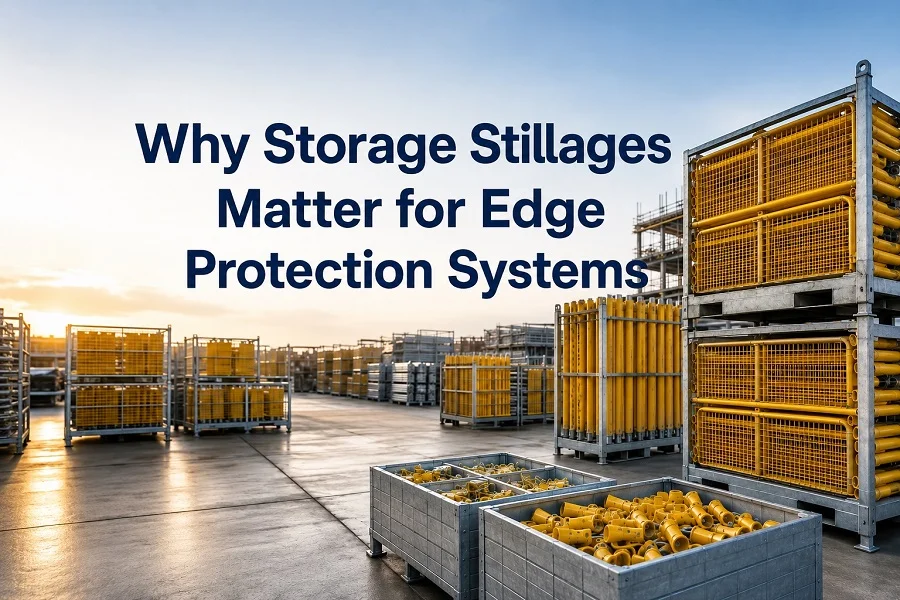
Introduction
Edge protection systems are designed to be installed, removed and reused across different work areas and projects.
But between those uses, barriers, posts and attachments still need to be stored, transported and moved around the site.
Without a practical storage method, components can easily become mixed, damaged or lost. This is why storage stillages can play an important role in the overall management of an edge protection system.
They may look like simple steel racks, but for contractors, rental companies and distributors, stillages can make storage, transport and site handling much easier.
What Is an Edge Protection Stillage?
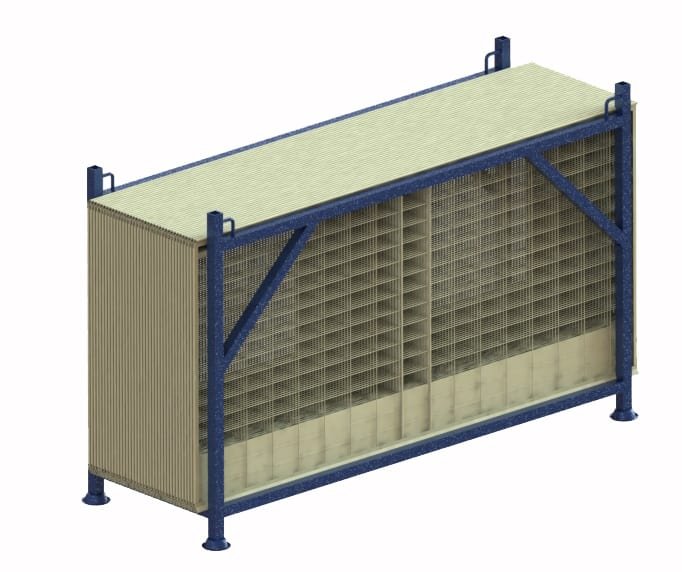
An edge protection stillage is a steel storage frame or rack designed to hold edge protection components in an organized way.
Different stillages may be used for:
- Mesh barriers
- Safety posts
- Attachments
Depending on the design, stillages may also be suitable for handling by forklift, telehandler, or crane.
A stillage is not part of the fall protection itself. However, it supports how the system is stored, moved and managed throughout its service life.
For projects using large quantities of edge protection, this can make a noticeable difference to daily site logistics.
1. Keep Edge Protection Components Organized
An edge protection system is normally made up of several different components.
These may include:
- Mesh barriers
- Safety posts
- Slab clamps
- Socket bases
- Bolts
- Pins
- Connectors
- Other fixing attachments
If all of these components are stored loosely, it becomes much harder to keep track of what is available.
Different parts may become mixed together, installation teams may need to spend more time sorting equipment, and components can easily be left behind when the system is moved to another work area.
Using dedicated stillages helps separate different component types.
For example, a project may use:
- One stillage for barriers
- One stillage for posts
- A smaller stillage or storage box for attachments
This makes it easier for site teams to see what is available, what is missing and what needs to be moved next.
Good organization becomes especially important when several types of edge protection attachment are being used on the same project.
2. Reduce Damage During Storage and Transport
Edge protection equipment goes through repeated handling throughout its working life.
A typical journey may look like this:
Factory → container → warehouse → truck → construction site → working floor → storage yard → next project
Every stage creates an opportunity for damage.
Poor storage and handling can result in:
- Bent mesh barriers
- Damaged posts
- Scratched coatings
- Deformed clamps
- Damaged locking components
- Missing pins or connectors
If barriers are stacked directly on the ground, they may also be exposed to forklift impact, uneven loading, dirt and standing water.
Stillages help keep components in a more controlled position during storage and transportation.
They also reduce the need to place products directly on the ground.
This does not remove the need for proper handling and inspection, but it can help reduce unnecessary damage between uses.
For reusable equipment, that matters.
The longer components remain in good condition, the easier it is to keep them in service.
3. Make Site Handling Faster
Moving edge protection around a construction site can involve a large amount of manual handling.
If barriers and posts are stored individually, workers may need to carry them one at a time or repeatedly load and unload small quantities.
A suitable stillage allows multiple components to be grouped together.
Depending on the stillage design and site lifting plan, the complete unit may then be moved using equipment such as:
- Forklifts
- Telehandlers
- Cranes
For example, instead of moving dozens of barriers individually, a site team may be able to move one organized stillage to the required work area.
This can make handling more structured and reduce repeated movements.
The benefit becomes more noticeable on:
- High-rise projects
- Large concrete frame projects
- Repetitive floor layouts
- Projects using long runs of perimeter protection
On these projects, the edge protection system may need to move many times before the structure is complete.
4. Support Faster Floor-to-Floor Movement
Edge protection on a concrete frame project is rarely installed once and left in the same place until completion.
It often follows the construction cycle.
A simplified process may look like this:
Install → Use → Remove → Store → Lift → Reinstall
As one floor is completed, part of the edge protection system may be removed and transferred to the next level.
If the equipment is already grouped in stillages, this movement can be easier to manage.
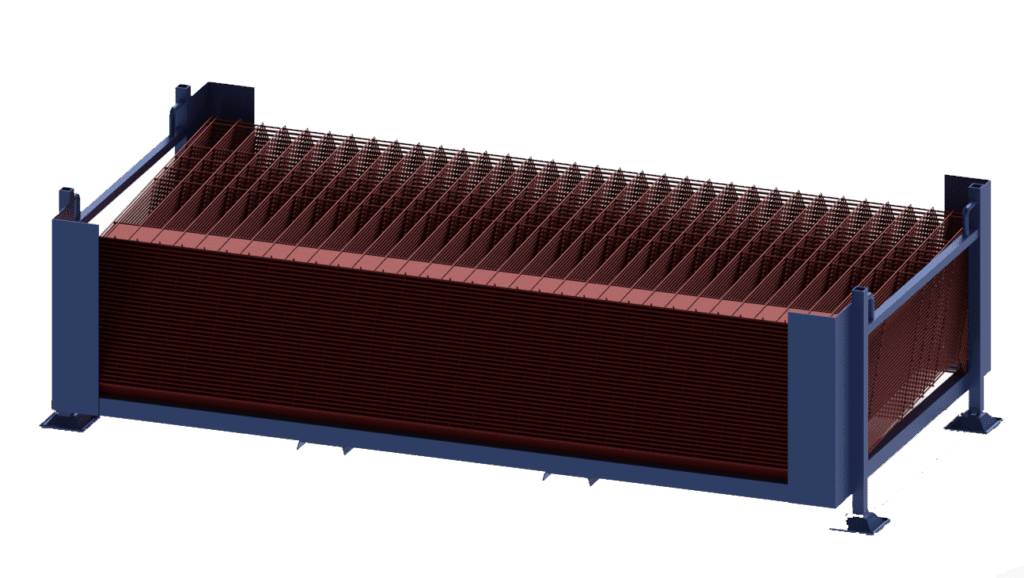
Barriers can be returned to a barrier stillage.
Posts can be collected together.
Attachments can be returned to their own container or rack.
The equipment can then be prepared for movement as a more organized unit.
This is especially useful on projects where the same system is repeatedly reused as the building rises.
Good edge protection logistics can therefore support the construction cycle instead of becoming an additional source of delay.
5. Reduce Lost Components
Large edge protection components such as barriers are relatively easy to see.
Smaller components are much easier to lose.
These may include:
- Bolts
- Pins
- Clamps
- Connectors
- Socket parts
- Small fixing accessories
The value of one missing component may not be particularly high.
But the operational impact can be much greater.
If the correct attachment is missing, one section of edge protection may not be ready for installation.
Workers then need to locate a replacement, move another component from a different area or wait for additional stock.
This is why component control matters.
Stillages and storage boxes provide a defined place for returned equipment.
They can help teams:
- Count components
- Identify shortages
- Return parts after removal
- Separate different attachment types
- Prepare complete sets for the next installation
For rental companies, the same principle applies when equipment returns from a customer.
Organized storage makes it easier to identify what has come back and what is missing.
6. Improve Truck and Container Loading
Storage stillages can also improve how edge protection equipment is prepared for transport.
Loose barriers, posts and attachments can be difficult to organize inside a truck or shipping container.
They may be:
- Harder to secure
- More difficult to count
- More likely to move during transport
- Less convenient to unload
- More vulnerable to handling damage
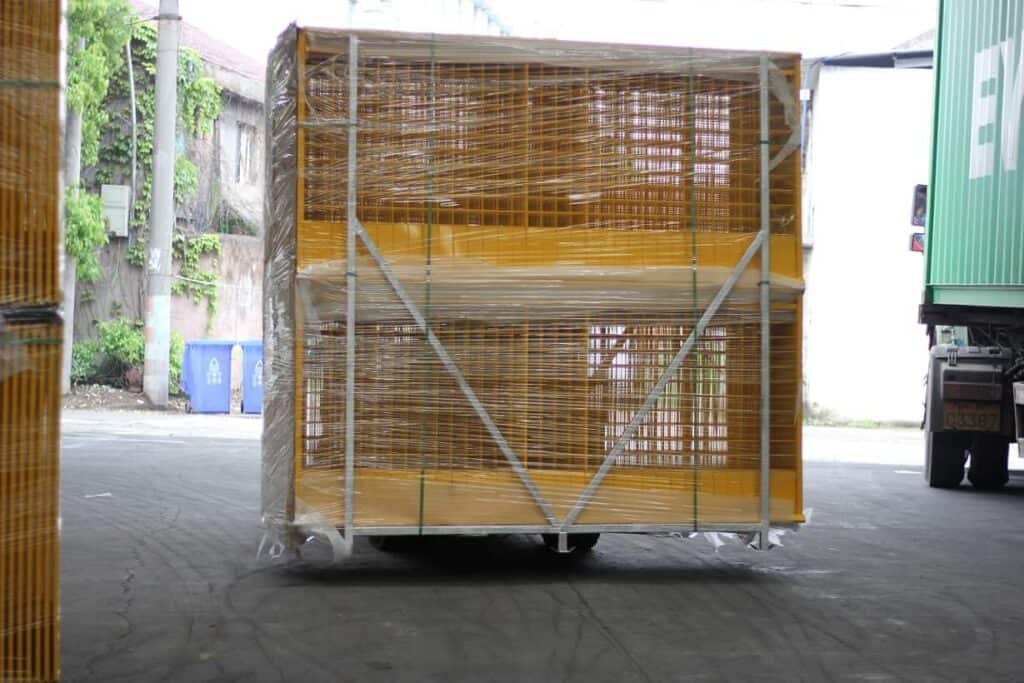
A well-designed stillage provides a more predictable loading unit.
This can make forklift handling easier and help organize the available loading space.
Stackable stillages may also help use vertical space more effectively where the stillage design, load limits and transport conditions allow it.
The exact loading efficiency will depend on:
- Barrier dimensions
- Stillage size
- Product quantity
- Container or truck dimensions
- Weight restrictions
- Loading method
For this reason, buyers should not assume that every stillage automatically reduces freight cost.
However, good stillage design can make the loading process more orderly and easier to plan.
7. Make Inventory Management Easier
Stillages can also act as simple inventory units.
For example, if one full stillage contains a known number of barriers, a yard manager can quickly estimate how much equipment is available without counting every component individually.
This can help answer questions such as:
- How many barriers are currently available?
- How many are on hire?
- How many are waiting for inspection?
- How many are damaged?
- How many complete stillages are ready for dispatch?
This is particularly useful for rental companies managing a large fleet.
Instead of treating every barrier or post as an individual item during daily handling, equipment can be managed in practical groups.
That makes stock movement easier to understand.
It can also help when preparing equipment for a new customer or project.
A good edge protection system should therefore be easy to manage not only while installed, but also when it is sitting in the yard.
8. Help Separate Returned, Damaged and Ready-to-Use Components
Returned edge protection equipment should normally be checked before being placed back into active stock.
A component may have been:
- Bent
- Impacted
- Improperly modified
- Damaged during transport
- Exposed to corrosion
- Returned with missing parts
If returned equipment is mixed immediately with inspected stock, damaged components may accidentally be sent back to another project.
Stillages can help create a simple separation system.
For example:
Ready for Use
Components that have been inspected and can be issued again.
Returned — To Inspect
Equipment that has come back from site but has not yet been checked.
Repair or Review Required
Components that show damage or require further assessment.
This approach can be particularly useful for rental fleets where equipment is constantly moving between different customers.
9. What Should Buyers Look for in an Edge Protection Stillage?
Not every stillage is equally practical.
The design should match the components being stored and the way they will be handled.
Here are several points worth checking.
Strong Steel Construction
A stillage used on construction sites will experience repeated loading, unloading and movement.
The frame should therefore be suitable for the expected handling conditions and component weight.
Suitable Dimensions
The stillage should match the equipment being stored.
A barrier stillage needs to suit the barrier length and shape.
A post stillage may require a completely different design.
Poorly matched dimensions can waste space or make loading difficult.
Forklift Access
If the stillage will be moved by forklift, check whether the fork entry points are practical for the equipment normally used in the warehouse or on site.
Crane Lifting Provision
Some projects may need to lift complete stillages between floors.
Where crane lifting is intended, buyers should confirm whether the stillage is designed for that purpose and follow the relevant lifting instructions and site procedures.
A forklift stillage should not automatically be assumed to be suitable for crane lifting.
Stackability
Stackable designs can help reduce the floor area required in a warehouse or yard.
However, stacking should only be carried out within the manufacturer’s stated limits and on suitable ground.
Easy Loading and Unloading
A compact stillage is useful, but it should not make components difficult to remove.
Site teams should be able to load and unload products without unnecessary handling.
Defined Component Capacity
It is useful to know how many components a stillage is intended to carry.
For example:
- Number of barriers
- Number of posts
- Number of clamps
A defined capacity also makes counting and inventory management easier.
Suitable Surface Protection
Stillages may spend significant time outdoors.
A suitable galvanized or coated finish can help protect the steel against corrosion during repeated site and yard use.
10. Stillages Are Part of the Complete Edge Protection Supply
When buyers plan an edge protection order, most attention naturally goes to the components that create the physical barrier.
These normally include:
- Edge protection barriers
- Safety posts
- Fixing attachments
But larger projects should also consider what happens to those components before installation and after removal.
A more complete supply plan may include:
- Mesh barriers
- Safety posts
- Slab clamps or other attachments
- Spare components
- Barrier stillages
- Post stillages
- Storage boxes for smaller accessories
This becomes increasingly important when the system will be used repeatedly across several floors, several project phases or multiple customer sites.
At APAC, storage and handling can be considered together with the main edge protection system when planning project quantities and supply arrangements.
The aim is not simply to deliver barriers and posts.
It is to make the complete system easier to receive, store, move, use and reuse.
Conclusion
Edge protection systems are repeatedly installed, removed, transported and stored throughout their service life.
How those components are managed between installations can have a direct effect on equipment condition, site handling and inventory control.
Storage stillages help create a more organized process.
They can make it easier to:
- Protect equipment during storage
- Move components around the site
- Reduce lost parts
- Organize transport
- Manage rental inventory
- Separate returned and damaged equipment
- Prepare the system for reuse
For contractors, distributors and rental companies, a stillage is therefore more than a simple storage rack.
It is part of how the edge protection system is managed throughout its lifecycle.
The protection system performs its main job at the building edge, but good storage and handling help make sure the right components arrive there in the right condition.
FAQ About Edge Protection Stillages
What Is a Stillage Used for in an Edge Protection System?
A stillage is used to store and transport edge protection components such as mesh barriers, posts and attachments.
It helps keep components organized and can make forklift, yard and site handling easier.
Can Edge Protection Stillages Be Lifted by Crane?
Some stillages may be designed with suitable lifting provisions, but this should never be assumed.
Buyers should confirm the manufacturer’s intended lifting method and follow the applicable lifting instructions and site procedures.
How Many Edge Protection Barriers Fit in One Stillage?
The capacity depends on the barrier dimensions and stillage design.
Different barrier sizes may therefore require different stillage capacities.
Buyers should confirm the recommended quantity with the supplier before planning transport or inventory.
Do Barriers and Posts Need Separate Stillages?
They often do because barriers and posts have very different dimensions.
Using separate stillages can also make stock control and site distribution easier.
Smaller attachments may be better stored in dedicated boxes or compact storage frames.
Why Are Stillages Useful for Edge Protection Rental Companies?
Rental companies repeatedly receive, inspect, store and dispatch the same equipment.
Stillages can help organize this process by grouping components into manageable quantities.
They can also make it easier to identify returned stock, inspect damaged equipment and prepare complete sets for the next customer.