

Introduction
Scaffold stairs provide safe and convenient access between working levels on construction scaffolding. Compared with climbing ladders, properly designed scaffold stair systems offer more comfortable access, particularly on projects where workers need to move frequently between levels while carrying tools and equipment.
There are several types of scaffold stairs available, including fixed scaffold stairways, stretcher stairs, mobile access stairs and lightweight aluminium stair systems. These options differ in their materials, installation methods, mobility and compatibility with different scaffolding systems.
Choosing the right scaffold stairs depends on project duration, working height, access frequency, available space, scaffold configuration and applicable safety requirements. This guide explains the main types of scaffold stairs, their advantages, typical applications and key considerations for contractors, scaffold rental companies and equipment buyers.

Stretcher Scaffold Stairs
Stretcher scaffold stairs are fixed stair units designed to connect different working levels within a scaffold structure. They are commonly used on construction projects where workers require regular and convenient access between platforms.
These stairs typically consist of two supporting stringers and a series of treads. The stringers form the main structural sides, while the treads provide individual walking surfaces. Depending on the system, the stair unit may be installed at an angle between scaffold lifts and secured using designated connections.
Key characteristics include:
- Fixed Installation: Once properly installed, the stair unit remains in position as part of the scaffold access arrangement.
- Regular Access: Suitable for construction sites where workers frequently move between different scaffold levels.
- Durable Construction: Available in steel or aluminium, depending on the product design.
- Integrated Access: Can be incorporated into compatible scaffold systems with suitable landings and edge protection.
Stretcher scaffold stairs are particularly useful on large construction projects, building renovations and infrastructure sites where repeated movement between working levels is necessary.
When selecting a stretcher stair unit, check its overall dimensions, step arrangement, connection details, landing requirements and compatibility with the scaffold system.
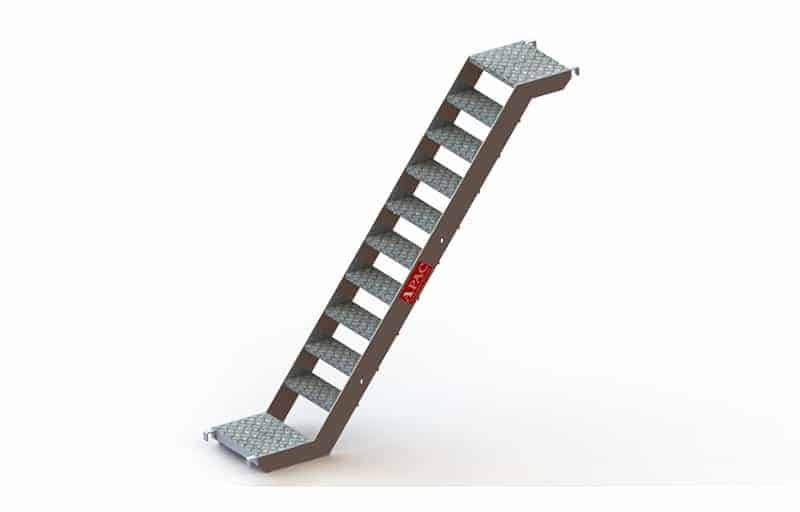
Basic Scaffold Stairs
Basic scaffold stairs provide a straightforward solution for accessing elevated working platforms. They are generally designed with a simple step arrangement and compatible connections that allow them to be incorporated into a scaffold structure.
Compared with more integrated stair tower systems, basic scaffold stairs may offer a simpler and more economical access option for projects with relatively straightforward requirements.
The main characteristics include:
- Simple Construction: A straightforward arrangement of steps and supporting members.
- Practical Installation: Designed to connect to compatible scaffold structures using the specified fittings.
- Material Options: Depending on the product, basic stair units may be manufactured from steel, aluminium or other suitable materials.
- Project Flexibility: Can be considered for temporary access arrangements where the scaffold configuration allows.
Basic scaffold stairs can be used for maintenance, renovation and construction projects where workers need access to elevated areas. However, the term does not refer to a single standardised stair design, so buyers should confirm the actual product dimensions, connection method and safety features.
For projects requiring frequent access, consider whether a dedicated scaffold stair system with suitable handrails, landings and edge protection would provide a better long-term solution.


Mobile Scaffold Stairs
Mobile scaffold stairs are designed to provide access at different locations within a construction or industrial work area. Unlike fixed scaffold stair units, mobile stairs can be repositioned when access requirements change.
Depending on the product design, mobile scaffold stairs may feature a self-supporting frame, wheels or castors, locking mechanisms, handrails and non-slip steps.
Common characteristics include:
- Mobility: Allows the access unit to be moved between designated working locations.
- Locking Castors: Mobile units generally require suitable wheel-locking arrangements and stabilisation before use.
- Integrated Handrails: Provide support while workers move up and down the stairs.
- Flexible Access: Useful for maintenance, warehouse operations and construction activities where work locations change.
Mobile scaffold stairs should only be moved and used according to the manufacturer’s instructions. Where applicable, the unit must be stabilised and its castors locked before workers climb it. It should not be moved while occupied unless the product is specifically designed and approved for that operation.
For buyers, important specifications include working platform height, stair width, wheel configuration, rated capacity, overall dimensions and the intended operating surface.
Aluminium Scaffold Stairs
Aluminium scaffold stairs are widely used where reduced equipment weight and ease of handling are important. Aluminium provides a favourable strength-to-weight ratio, making it suitable for access equipment that needs to be transported, installed and repositioned regularly.
Compared with many conventional steel stair units, aluminium stairs can be lighter while still providing the structural performance required for their intended application.
Key advantages include:
- Lightweight Construction: Easier handling and transportation can reduce manual handling effort during installation and dismantling.
- Corrosion Resistance: Aluminium naturally forms a protective oxide layer, making it suitable for many outdoor and humid environments.
- Non-Slip Treads: Depending on the design, stair treads may incorporate anti-slip surfaces to improve footing.
- Reusable Design: Suitable for repeated use when inspected, handled and maintained according to the manufacturer’s instructions.
Aluminium scaffold stairs are commonly used for construction access, painting, electrical installation, maintenance and industrial work. Their suitability depends on the required working height, load capacity, connection design and project conditions.
When comparing aluminium stair products, consider the alloy specification, tread design, side stringers, connection fittings and rated load rather than evaluating the product on weight alone.
Advantages of Scaffold Stairs Compared with Ladders
Scaffold stairs can provide significant practical advantages over ladders, particularly on construction projects where workers need frequent access between different levels.
1. Improved Access and Safety
- More Comfortable Walking Surface: Properly designed stair treads provide a more natural walking movement than climbing a ladder.
- Handrails and Edge Protection: Suitable stair systems can incorporate handrails and protective barriers to reduce fall risks.
- Convenient Movement: Stairs can make repeated movement between working levels easier for workers.
However, the safety performance of a scaffold stairway depends on its design, installation, condition and the provision of suitable handrails, landings and access protection.
2. Improved Productivity
- Workers can move between levels using a more convenient walking route.
- Supervisors and inspectors can access different working areas more efficiently.
- Frequent movement between work zones can become more organised.
- Suitable stair access can reduce reliance on ladders for routine movement between scaffold lifts.
3. Better Manual-Handling Ergonomics
- Stairs can provide a more comfortable route for routine access compared with repeatedly climbing vertical ladders.
- Handrails offer additional support during movement.
- Appropriate stair width and tread dimensions can improve accessibility for workers carrying permitted tools and small equipment.
Workers should still maintain safe access practices and avoid carrying loads that prevent them from maintaining proper balance or using handrails.
4. Cost-Effective Access Solutions
- Basic Stair Units: Can provide a relatively economical access option for suitable temporary applications.
- System Stairways: May offer better long-term value on projects requiring regular access between multiple levels.
- Reusable Components: Durable steel and aluminium stair units can be reused across projects when maintained in suitable condition.
For scaffold rental companies, the choice should also consider storage, transport, compatibility with existing scaffold inventories and maintenance costs.
5. Compliance and Site Inspection Readiness
Properly selected and installed scaffold stairways can help construction teams meet applicable requirements for safe access and work at height.
Relevant considerations include:
- Suitable stair dimensions and access arrangements.
- Secure connections to the scaffold structure.
- Handrails and edge protection where required.
- Non-slip walking surfaces and unobstructed access routes.
- Inspection and maintenance of stair components.
Providing suitable stair access can also support site safety planning, contractor inspections and project compliance reviews.
Scaffold Stair Compatibility and Selection Considerations
Not every scaffold stair unit is compatible with every scaffolding system. Before purchasing or installing scaffold stairs, it is important to verify the connection arrangement and overall system configuration.
1. Scaffolding System Compatibility
Scaffold stairs may be designed for specific modular systems, including Ringlock, Cuplock, frame scaffolding and other prefabricated scaffold structures.
Check the following details:
- Connection type and fitting dimensions.
- Bay length and scaffold width.
- Vertical lift height and stair inclination.
- Landing arrangements and platform dimensions.
- Compatibility with guardrails and other safety components.
Components from different scaffold manufacturers should not be assumed interchangeable without verification of their compatibility and structural suitability.
2. Stair Dimensions and Working Height
The required stair dimensions depend on the difference in elevation between working platforms and the available installation space.
Buyers should confirm:
- Overall stair length and width.
- Number of steps and individual tread dimensions.
- Vertical rise between landings.
- Available installation space and stair angle.
- Landing requirements at the top and bottom.
3. Material and Surface Treatment
Steel and aluminium are commonly used in scaffold stair manufacturing.
- Steel Stairs: Offer a robust construction and are commonly supplied with protective coatings or hot-dip galvanizing.
- Aluminium Stairs: Offer reduced weight and good corrosion resistance, making them useful where frequent handling is required.
The final choice should consider the operating environment, handling requirements, expected service life and project specifications.
4. Load Capacity and Safety Features
Stair units should be selected according to their rated capacity and intended use. The complete stair assembly, including treads, stringers, connections and supporting scaffold structure, must be suitable for the expected loads.
Also confirm whether the product includes:
- Non-slip treads.
- Handrails and intermediate protection.
- Secure connection fittings.
- Suitable landing and access arrangements.
- Manufacturer installation and inspection instructions.
Safety Requirements for Scaffold Stairs
Scaffold stairs are part of the overall scaffold access arrangement and should be designed, installed and maintained according to the applicable regulations and manufacturer’s instructions.
United States
In the United States, OSHA 29 CFR 1926 Subpart L establishes requirements for scaffolds used in construction.
Relevant provisions include:
- OSHA 29 CFR 1926.451 – General requirements for scaffolds, including access and platform provisions.
- OSHA 29 CFR 1926.452 – Additional requirements for specific types of scaffolds.
United Kingdom and Europe
For UK and European projects, scaffold access arrangements should be assessed against the applicable work-at-height regulations and scaffold design standards.
- EN 12810: Facade scaffolds made of prefabricated components.
- EN 12811: Temporary works equipment, including performance requirements and general design guidance for scaffolds.
- UK Work at Height Regulations 2005: Requirements for planning and carrying out work at height safely.
The UK Health and Safety Executive scaffolding guidance provides further information on scaffold safety, access and inspection.
Compliance should be assessed against the complete scaffold arrangement and the relevant local requirements. A stair component should not be assumed compliant simply because it is described as a scaffold stair or manufactured from a particular material.
How to Choose the Right Scaffold Stairs for Your Project
For contractors, distributors and scaffold rental companies, selecting suitable scaffold stairs involves evaluating both technical requirements and operational considerations.
- Project Type: Determine whether the stairs are required for long-term construction access, temporary maintenance work or mobile access applications.
- Scaffold System: Confirm whether the existing structure uses Ringlock, Cuplock, frame scaffolding or another system.
- Working Height: Provide the vertical distance between platforms and the required stair arrangement.
- Material: Compare steel and aluminium according to strength, weight, corrosion resistance and handling requirements.
- Load Capacity: Confirm the rated capacity and relevant manufacturer documentation.
- Safety Accessories: Check the availability of handrails, landing components, guardrails and other compatible accessories.
- Transportation: Consider packaging dimensions, stacking arrangements and container loading efficiency.
- Order Quantity: Provide the required quantities, specifications and destination market to support accurate procurement planning.
For repeat orders, maintaining consistent component specifications and connection dimensions is particularly important for rental companies and distributors managing existing scaffold inventories.
Conclusion
Scaffold stairs provide an important access solution for construction and temporary works, allowing workers to move between elevated platforms more conveniently. Different options, including stretcher stairs, basic scaffold stairs, mobile access stairs and aluminium stair units, offer different advantages depending on the project requirements.
When selecting scaffold stairs, buyers should consider more than material and purchase price. System compatibility, stair dimensions, load capacity, connection arrangements, handrails, landing requirements and applicable safety standards all play an important role in determining whether a product is suitable for the intended application.
For contractors, scaffold rental companies and distributors, choosing the right stair configuration can improve site access, support more efficient working practices and provide better long-term equipment value.
Providing the scaffold system type, required working height, stair dimensions and destination market will help identify suitable scaffold stair specifications for your project.